
Key Details
Orienteering maps are very accurate. You don't need and rarely have the time to read all the details on the map. Instead, choose the most important ones and envision a simpler view of the map. This is called simplification. This will save you time, maintain speed, and keep moving forward.
TIP
Imagine that the map shows only the most important things, such as trails, roads, streams, large hills, marshes, and ponds.
Rough and precise orientation
The path between two checkpoints can often be greatly simplified by focusing on only the most obvious details. This is called approximate or rough orientation. Select prominent features, linear, and clear landmarks. Ignore minor, insignificant details, such as stones, small hills, and slopes.
From the last clear landmark to the checkpoint, you need to be more precise. Pay attention to almost all details. This is called detailed, precise navigation. As you walk, pay attention to both large and small details.
Clear details
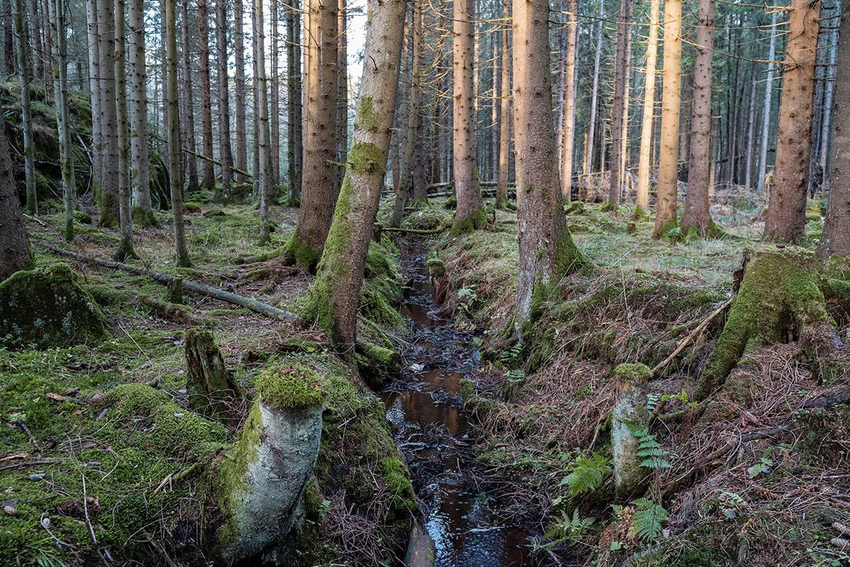
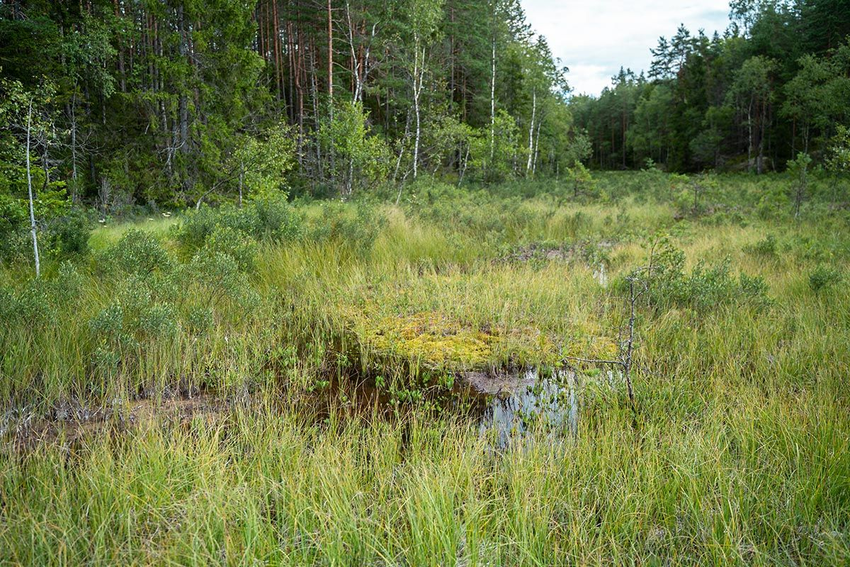
Try the Simplification
In the example below, you start from the hill. Drag the slider and you'll see how you can simplify the map view by focusing on selected details:
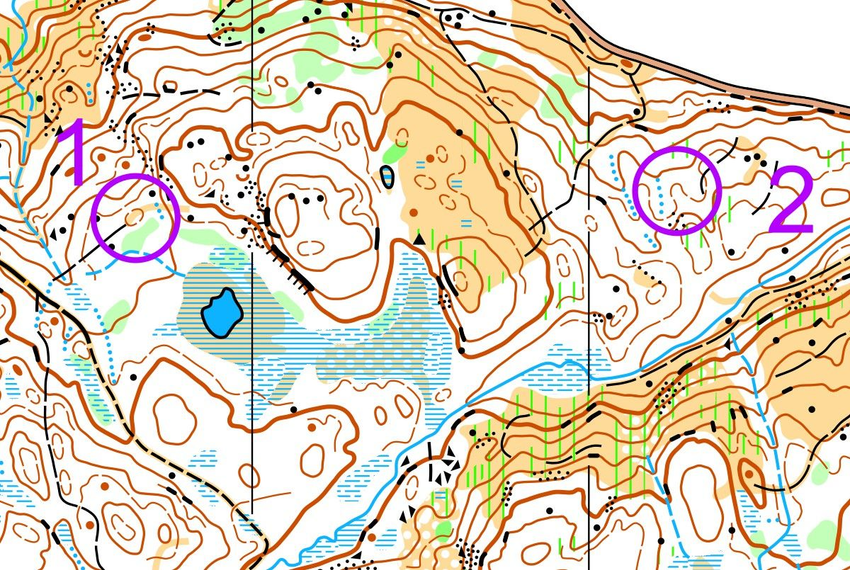
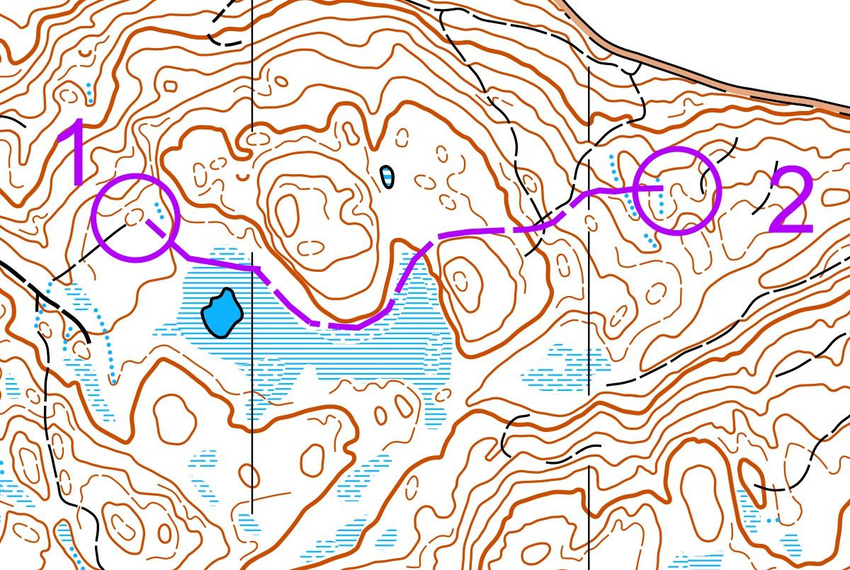
Run towards the body of water and follow along the marsh's edge. On the left side, there's a larger hill. At the end of the marsh on the right, there's another larger hill. On the slope of the hill ahead, you'll find paths, after which you need to navigate precisely towards KP.
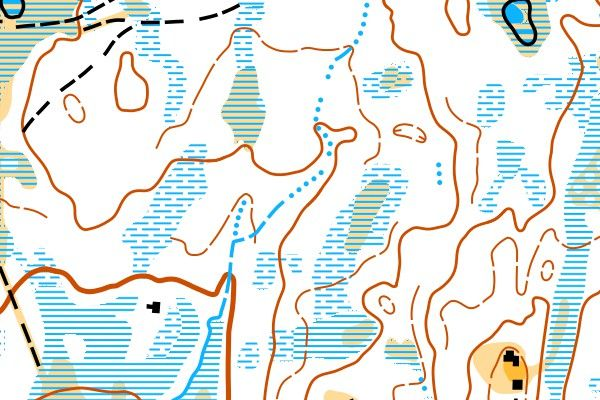
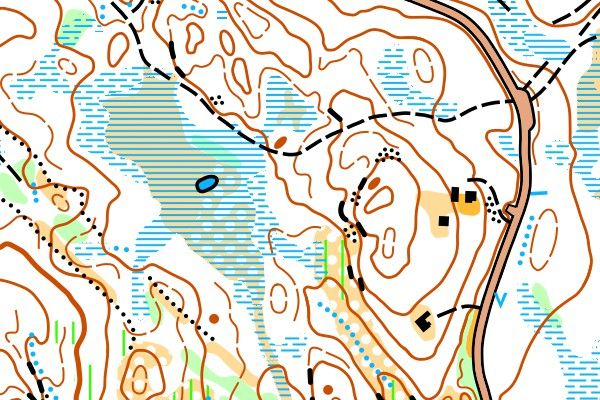
Which location is easier to simplify - location 1 or location 2?
Practice rough and precise navigation
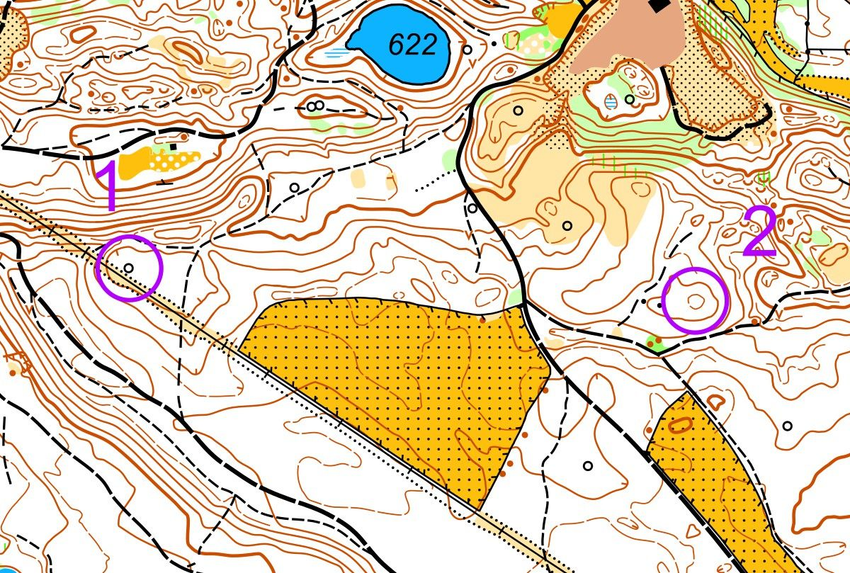
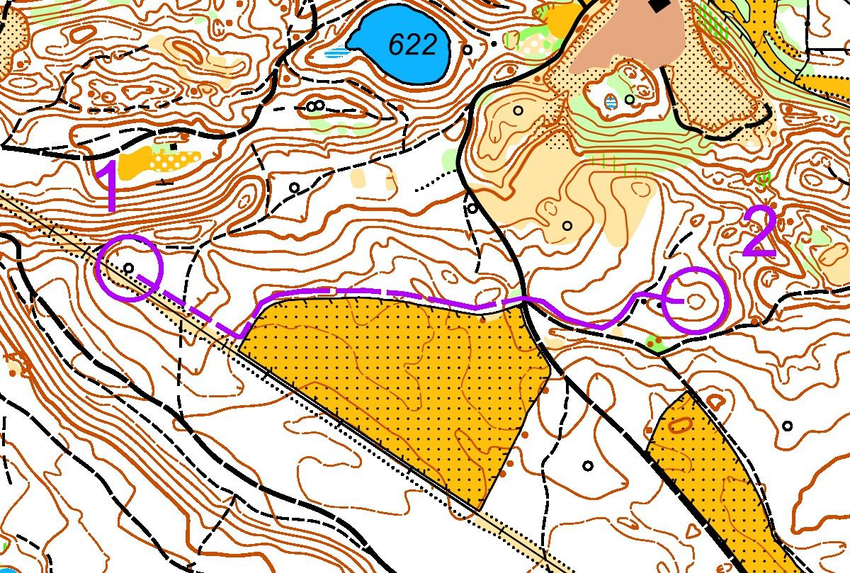
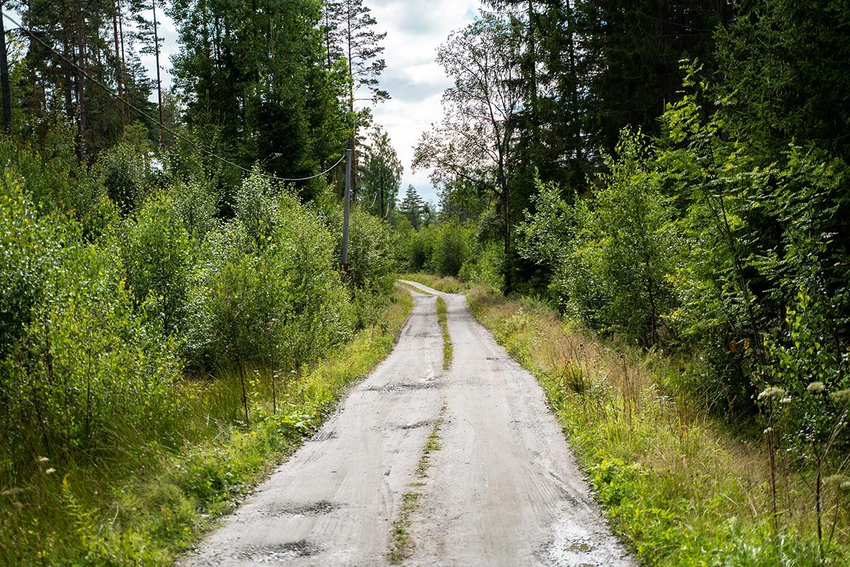
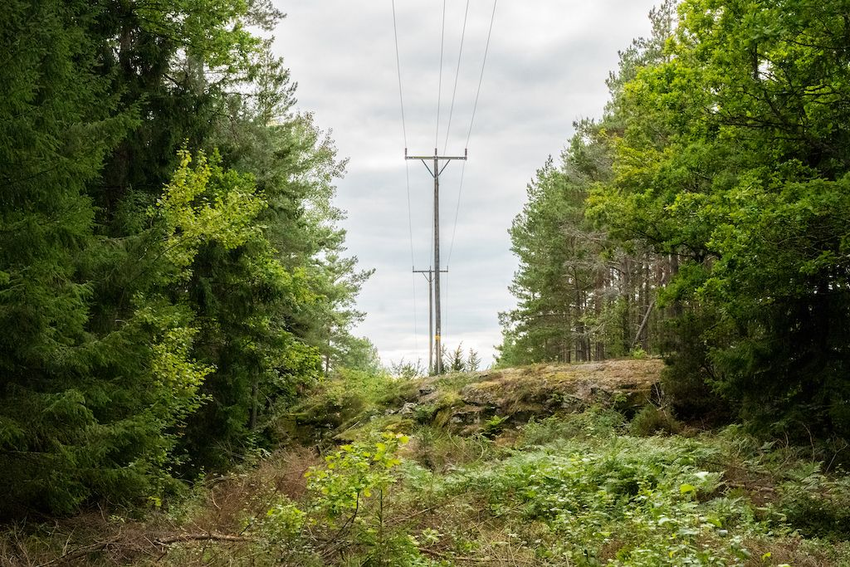
The following example teaches rough and precise orientation. Drag the slider. For rough orientation, use the power line, the fence running along the edge of the field, and the main road. You may walk fast or run, as there is no need to pay attention to fine details along the way. Once you reach a small open area, precise orientation begins. From here, take your time and check every detail—faint paths, stones—and navigate to the checkpoint on the hill.