

Don't know where you are
Making a mistake means you can't follow the plan you made to find your way in a variant. You don't know exactly where you are. It means extra time is needed to find a checkpoint. You can learn from both your and others' mistakes. In fact, this is how most people learn orienteering.
Why do mistakes happen?
What reason might you be mistaken? Well, maybe you:
If you made a mistake
Stop and stand still. Acknowledge to yourself that you made an error. Don't start running in zigzags searching for the point, hoping it will appear sooner or later.
Try to calculate in which direction and what distance you have traveled from the last clear landmark.
Find a clear landmark or a linear landmark by looking around, moving forward or sideways, or returning to the last clear landmark you passed, or the last linear landmark you followed.
In other words, you need to look at the area and orient it with the map or look at the map and align it with the area. Then, you will create a new plan and try again.
To find a large and clear landmark, instead of searching back and forth in the same small area, you can walk 100 meters away, or sometimes even more.
Drag the slider to see different solutions
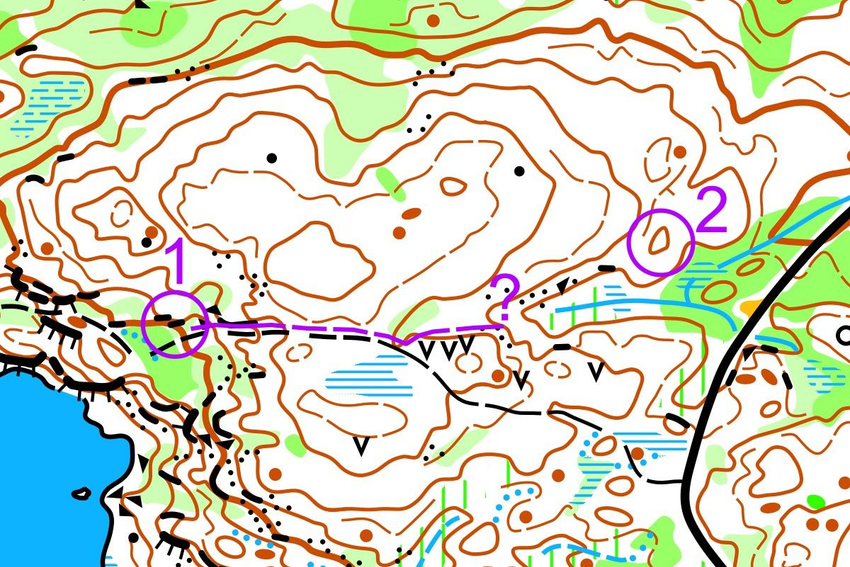
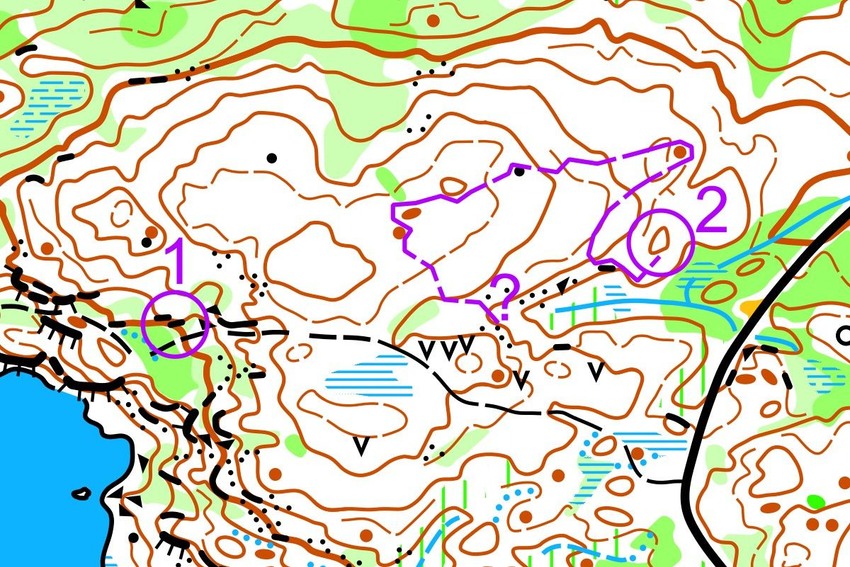
You can search, walk around, and randomly find an item.
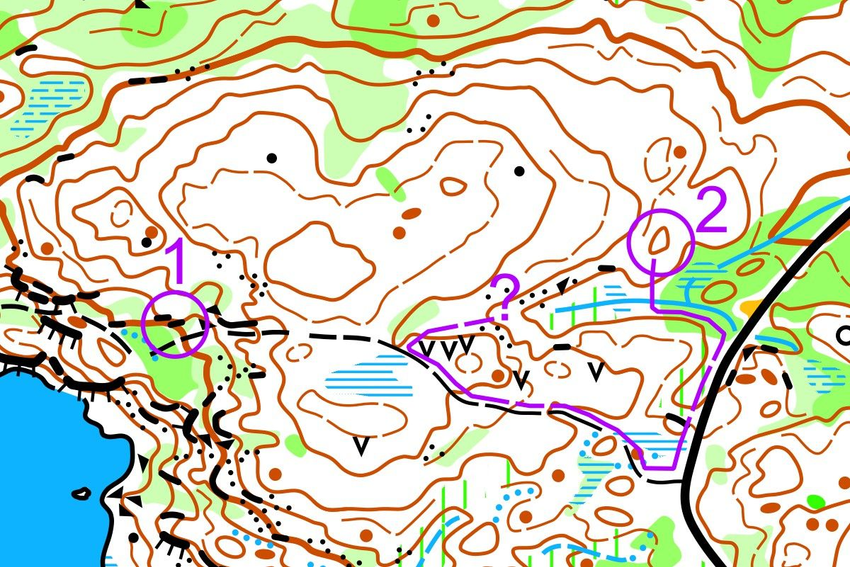
You can go back to the last clear landmark and create a new, simpler plan.
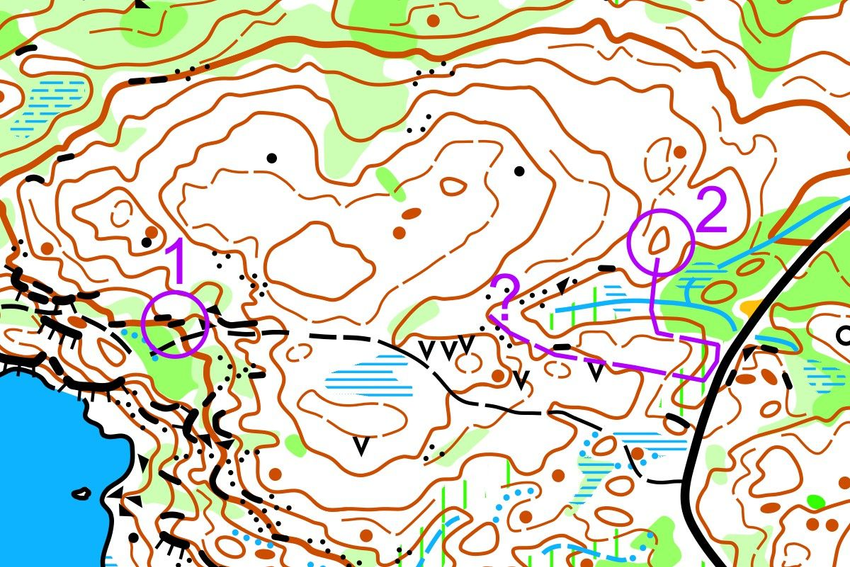
You can continue up to a clear landmark along the linear landmark and create a new plan.
How to avoid mistakes
When planning an option, you must consider the complexity of the option and choose the one that suits you best. Familiarity with different area types can also be beneficial.
Who do you think is more likely to make mistakes on the course: a beginner or someone who has been doing orienteering for several years?
TIP
Different orientation technique methods. Use simplified and rough orientation in hilly areas. Slow down when searching for a point in hilly terrain. Use precise orientation and watch the map closely in flatter, shallow areas (many small hills). In flat areas, focus a lot on the compass direction. Attach to cuttings and fields. Practice using contour lines.
Tracking Analysis
After finishing the course, it is useful to think about what you did and what you could have done differently. This way, you can improve your skills so that next time you'll navigate even better.