
8

Compass

Here you will learn about different types of compasses and their parts. You will also learn how to use a compass to orient a map and determine the compass direction.

North on the map

There are several things that can help you determine which direction on the map is north: Thin black lines running through the map from north to south - meridians (more simply north lines). An arrow marked with the letter N indicating north. North is always at the top of the map when you hold it so that the text is read from left to right.

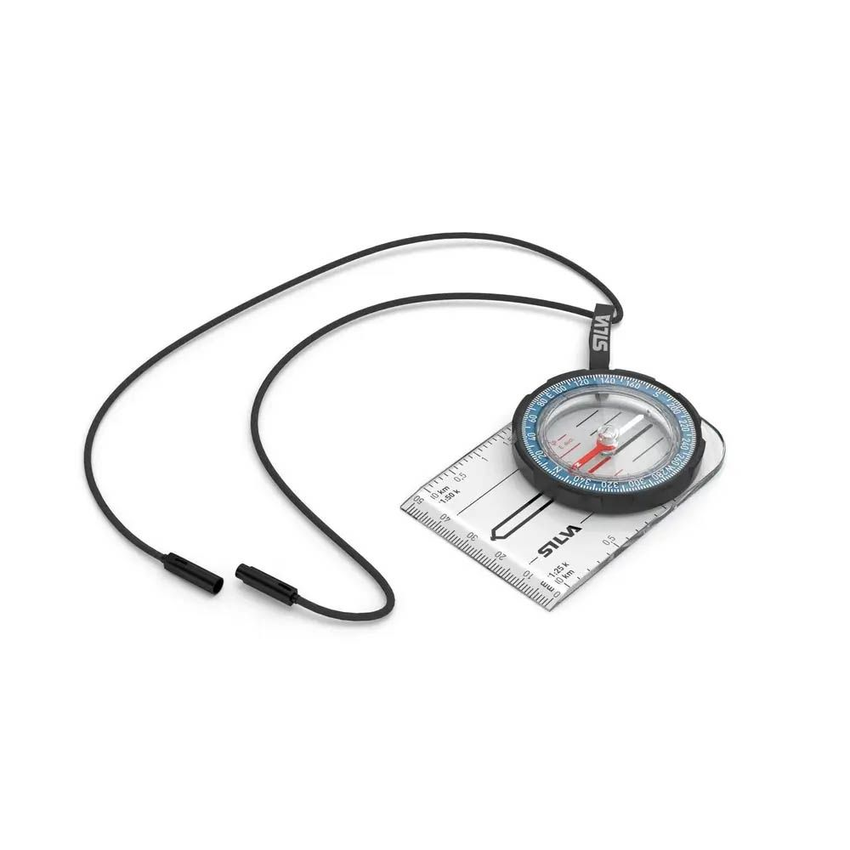
Direction of Travel Arrow
Base Plate and Scale
Index Line/Read Bearing Here
Magnetic Needle (North/Red End)
Orientation Lines

Use a compass to orientate the map.

In section 3, you learned to orient the map according to the terrain. You can also orient the map using a compass. It is done as follows:

1. Hold the compass horizontally in front of you, slightly above the map or on it.

2. Slowly rotate the map.

3. Be attentive, stop when the compass needle is parallel to the north lines of the map and the red end points to the north of the map.

Now the map is aligned with the terrain! Try it yourself:

Azimuth

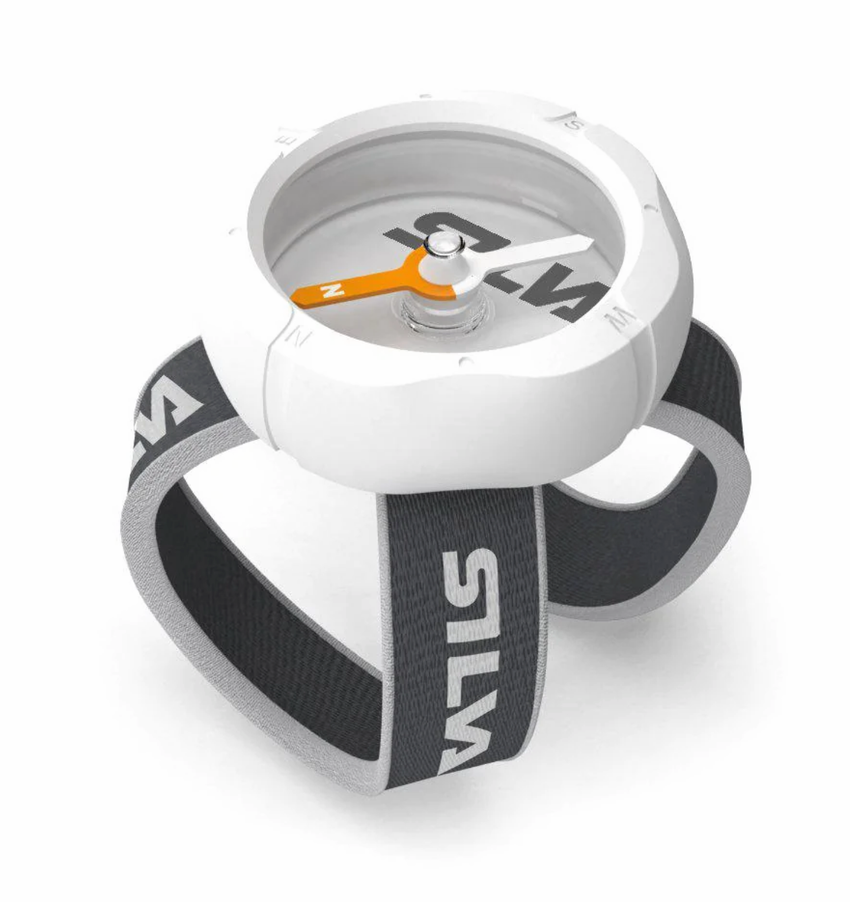
A plane compass is best suited to determine the azimuth from your current location to Checkpoint (CP). It will help you maintain direction as you move through the area. First, you need to set it up:

Place 1/3 of the compass edge alongside the imaginary line from your current location to KP. Remember, the direction arrow points to the checkpoint.

2/3 Turn the compass housing so that the compass housing lines are parallel to the map's north lines, and the north arrow points to the map's north.

3/3 Hold the compass horizontally in your hand, with its back edge pointing towards your abdomen, directly in front of your body. Rotate your entire body so that the red end of the compass needle remains completely still in the red north marker part of the compass casing. The direction of travel arrow now points to your destination.

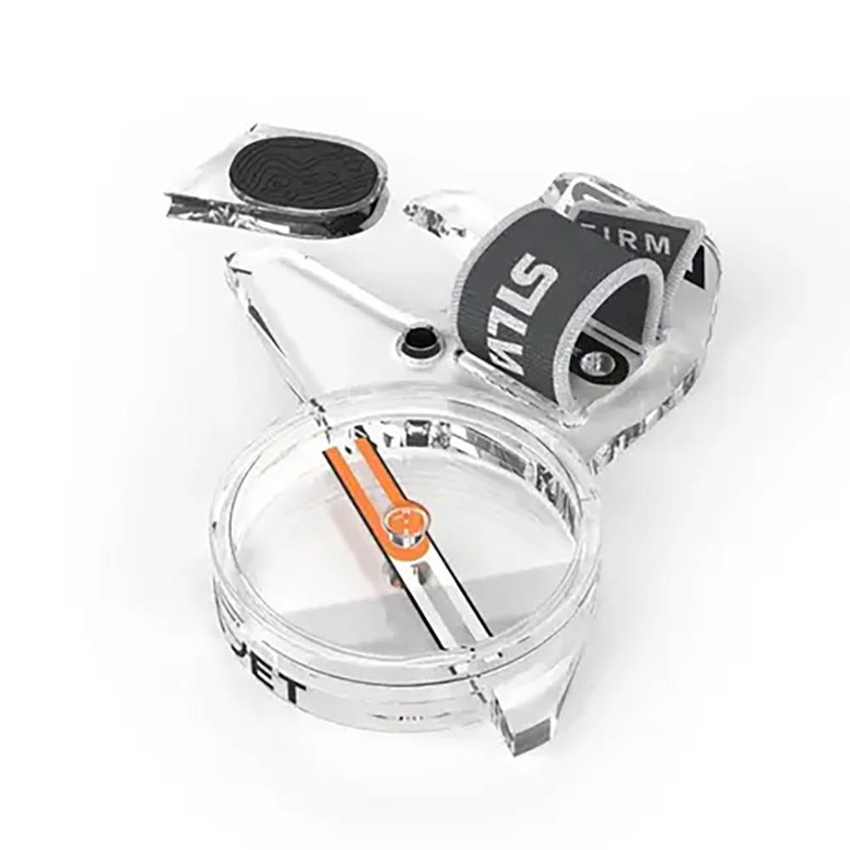
Also possible to set compass direction using compass on thumb:

1. Orient the map so that the compass needle and the north lines are parallel.

2. Place the tip of the compass where you are and let it point to the CP. Rotate your entire body, including your legs, to orient the map precisely.

3. Move towards the chosen location and continue to navigate using the compass tip, which always points to the next KP.

When is it most beneficial to use azimuth, when you are right by a linear landmark, or when you are distanced from it?

How to use azimuth

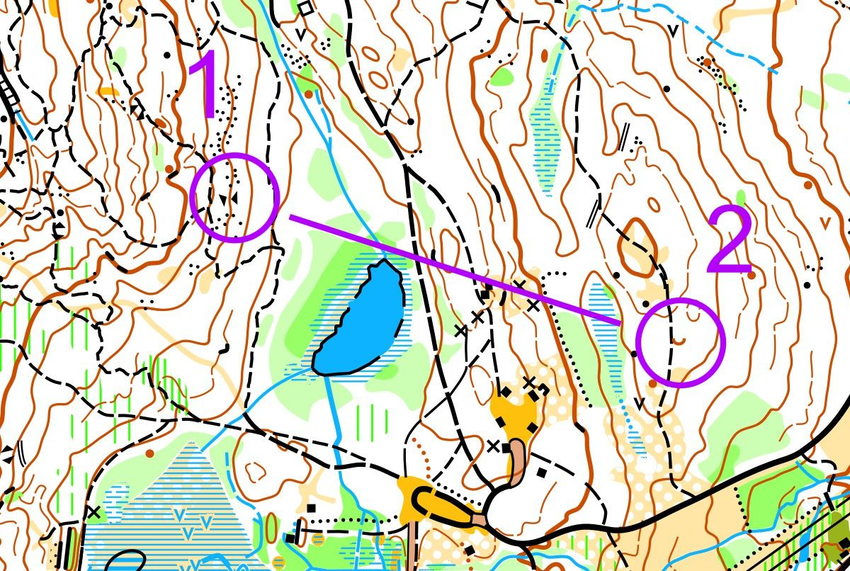
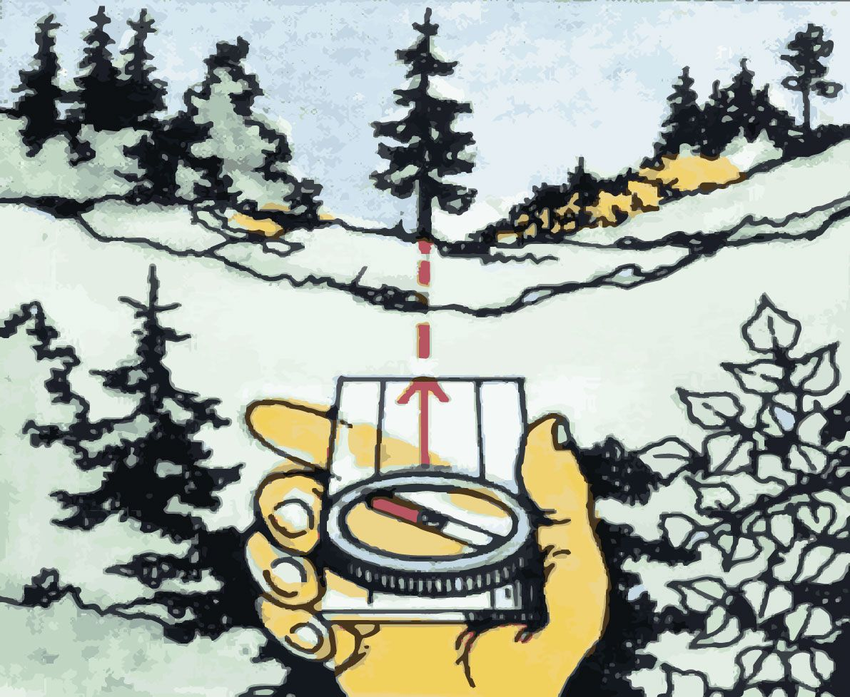
Find a clear reference point (directional reference) near you, which is precisely in the direction of your intended route. A tree, a distinctive mountain, a clearly visible marshland, or anything else that stands out from the surroundings are good reference points. They may be at a certain distance—they will help you more accurately determine the direction. You should always be able to see that reference point or be confident you can find it. If you encounter obstacles on your path, choose a reference point beyond the obstacle, circumvent it, and continue along the azimuth.

Compass needles pointing at a tree on the horizon

Before reaching the landmark, check your azimuth and then set a new azimuth. Continue similarly until you reach the CP. Ensure that the compass body does not rotate between these landmarks.

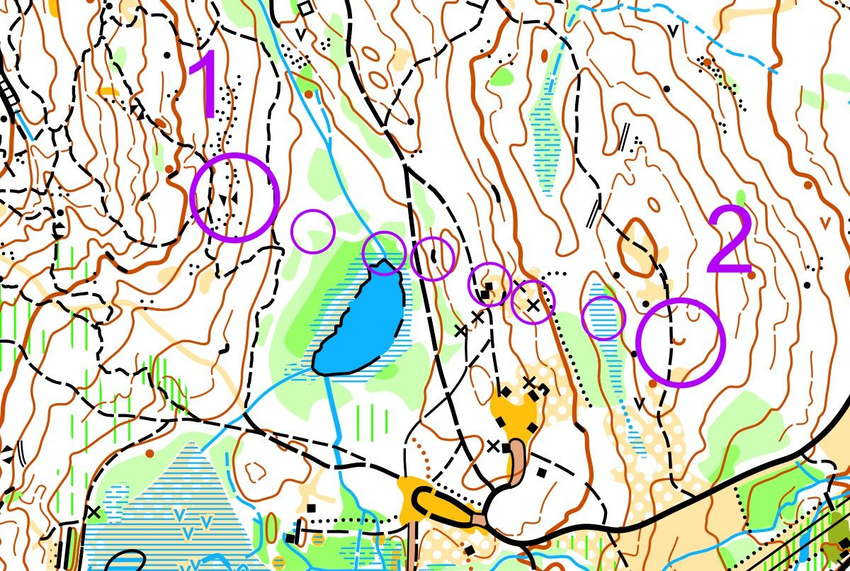
Direction landmarks and clear landmarks

Drag the slider to see details on the map that might be useful as directional markers and AO on the way to KP.

You should always select several options in the AO alternative and check them by going through. It is also helpful to assess how far to the KP. As you approach the KP, it is advisable to look to the right and to the left, as rarely does anyone hit the KP exactly.

It may be wise to divide the long option into stages and attach to LO along the way. Follow LO to AO and set a new azimuth direction.

TIP

If you've lost the direction of azimuth, you need to find out where you are and determine a new azimuth or return to a directional landmark before continuing the journey.

Question 1 of 7

Which part of the compass points north?

What are meridians (north lines)?

Map oriented by the compass when...

Which compass is best for determining direction?

Which arrow should you follow once you've set the compass direction?

Which of these points is the best observation point?

What to do if you've found the compass direction but suddenly can't follow it?