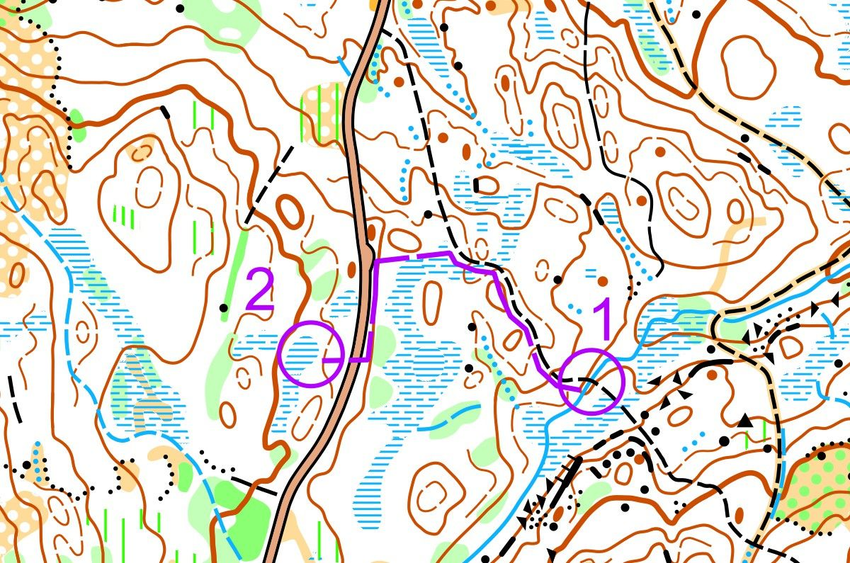
Possible Attachment Options
Using tethering, it is useful to leave a linear landmark at a safe point, e.g., a small hill in the example below.



Here you will learn about various location details that you can use to avoid making a mistake or running too far when heading to the checkpoint.
Attachment to objects in an area means you move in the area until you encounter a prominent linear landmark that you will definitely hit. Paths, roads, streams, forest edges, power lines, and ponds are suitable for attachment.
On the way to the obvious "attachment line," there's no need to constantly look at the map—you know you'll eventually hit it. However, it's advisable to use a compass to ensure you're always moving in the right direction. And as you get closer, be attentive so you don't bypass the "attachment line" without realizing it.
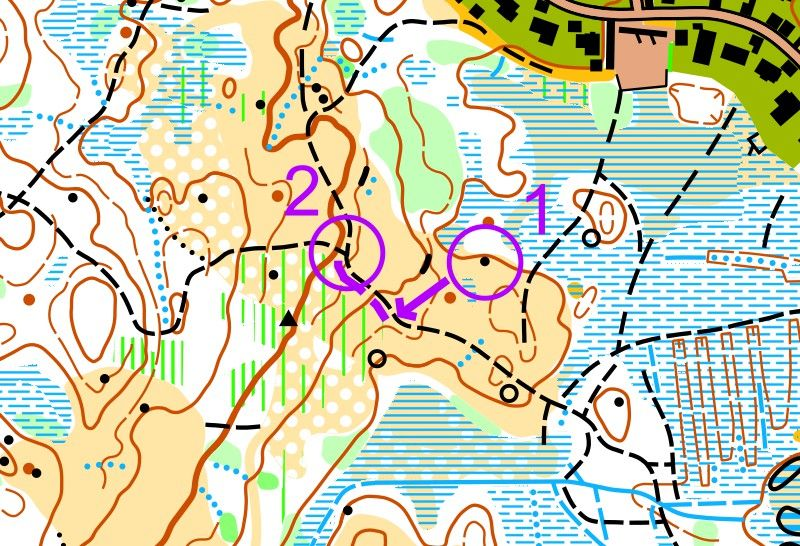
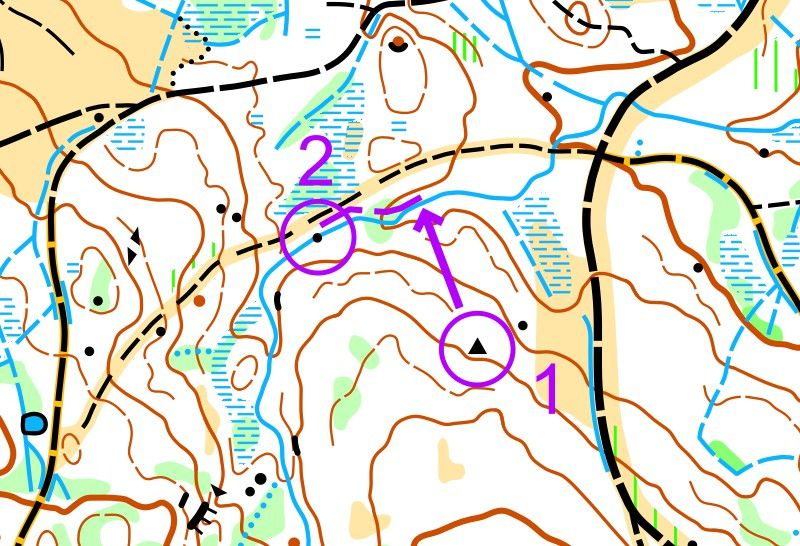
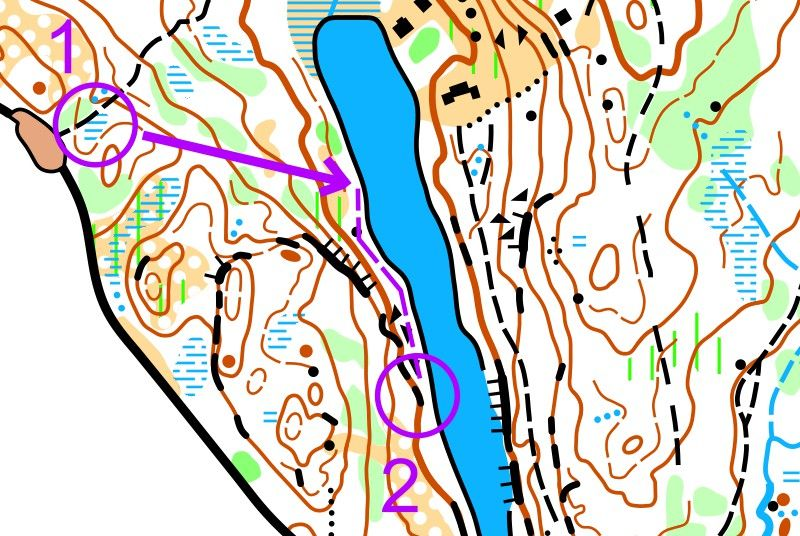
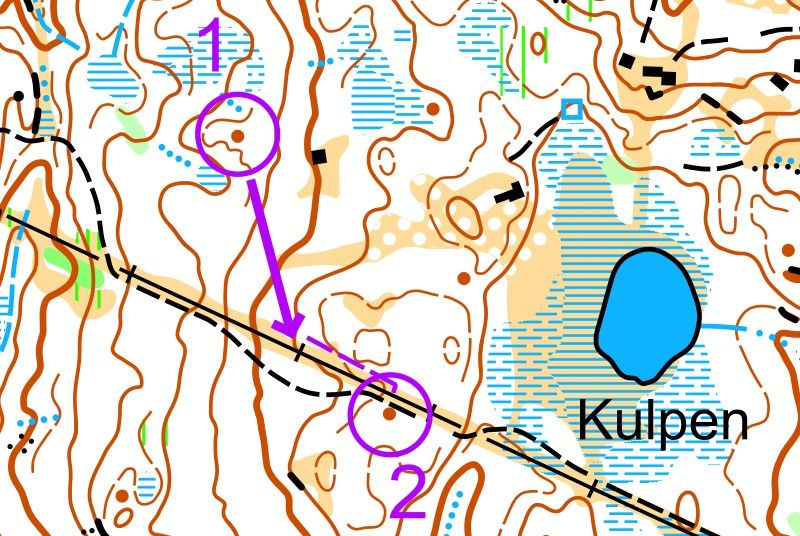
If the checkpoint is along a linear landmark, which is also the point of attachment, you might need to aim slightly toward the pole. Then you’ll know which way to go when you hit the new guiding line. In the example above, you aimed slightly to the left towards the stream, to the right towards the trail, and quite a lot to the left towards the pond.
Look at the map below. Here, you can use the anchor several times on your way to the next checkpoint. This way, you will shorten the route and probably reach the point faster, even if you don't follow linear landmarks the entire way. Do you see where you should go? Drag the slider.
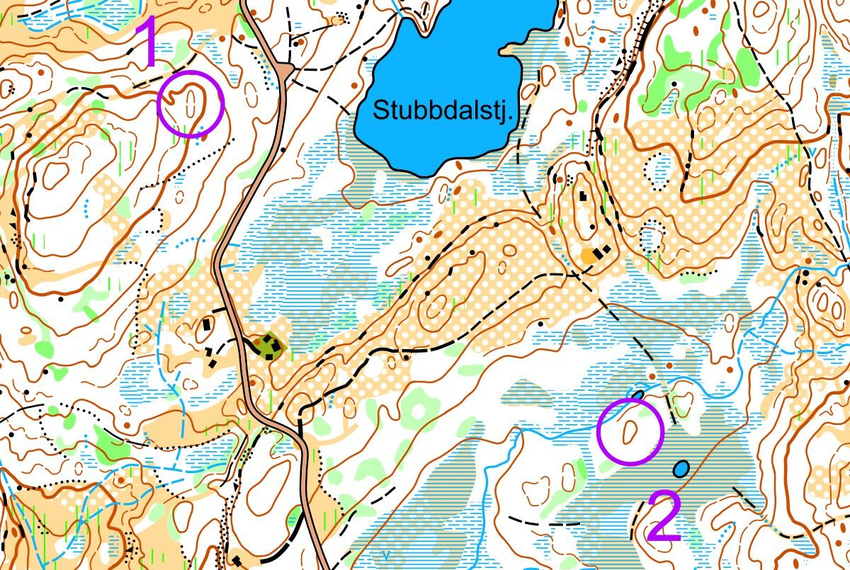
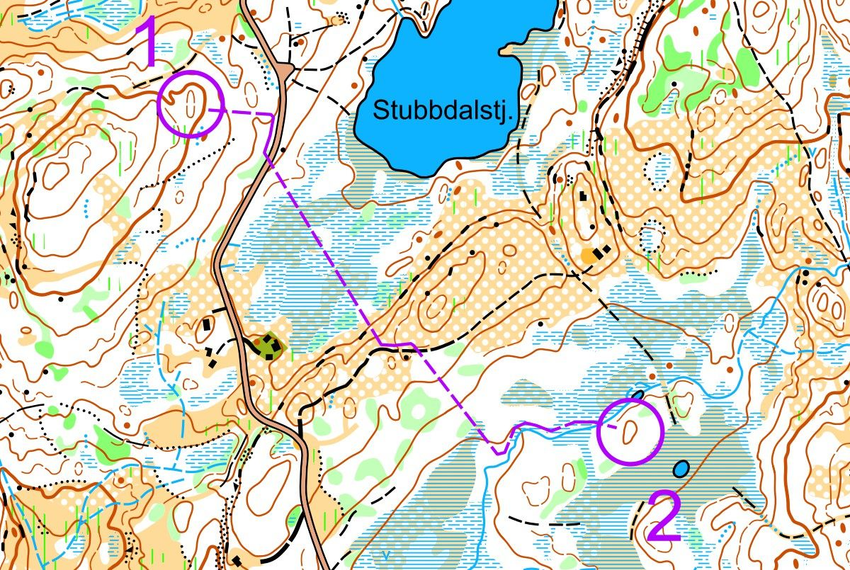
Using tethering, it is useful to leave a linear landmark at a safe point, e.g., a small hill in the example below.
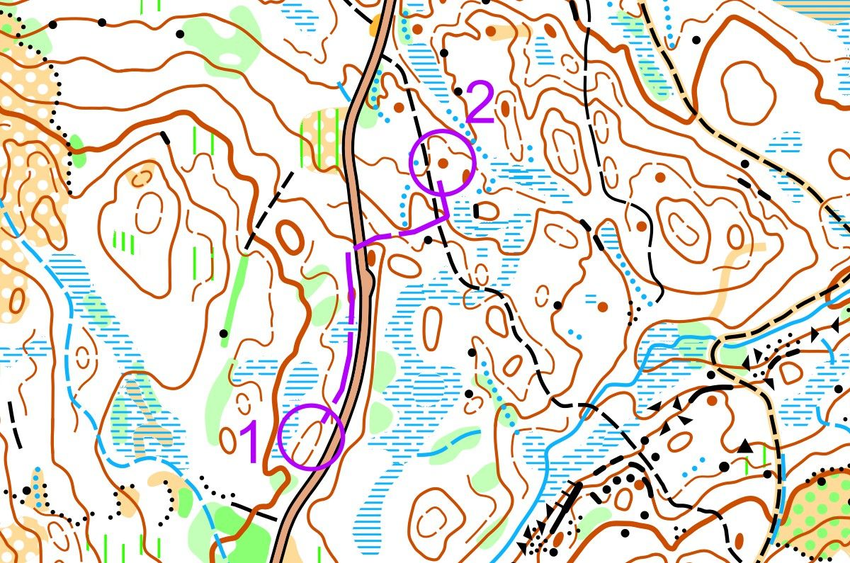
In some cases, it might be wiser to leave the linear landmark where it is closest to the new linear landmark. In this example - at the trail corner.