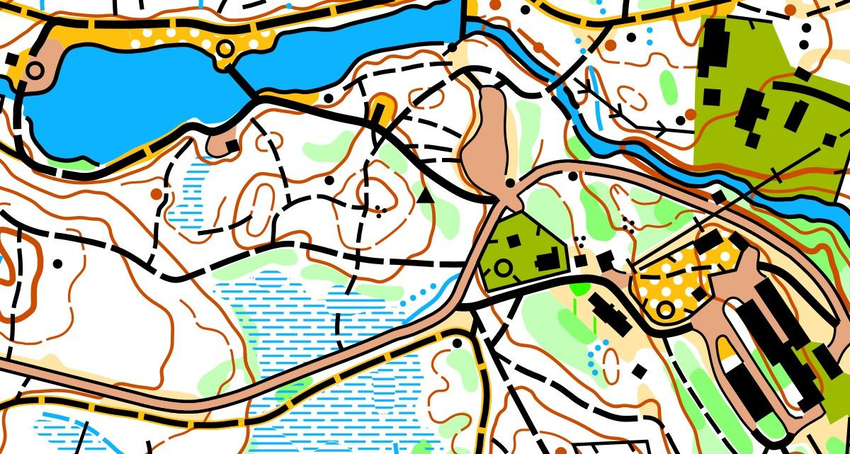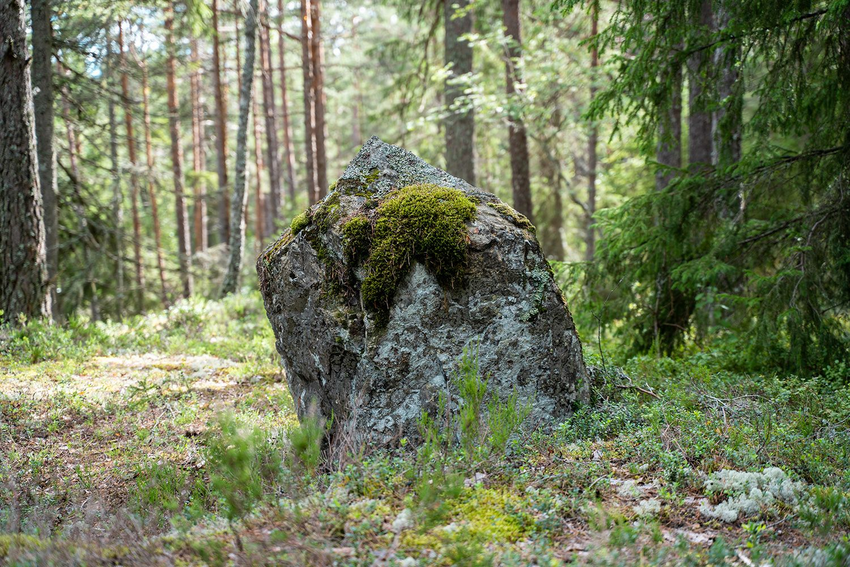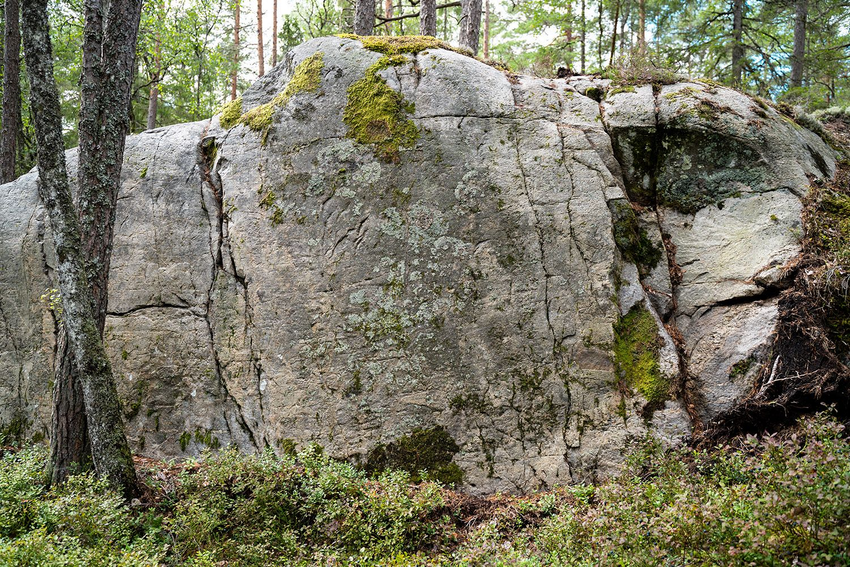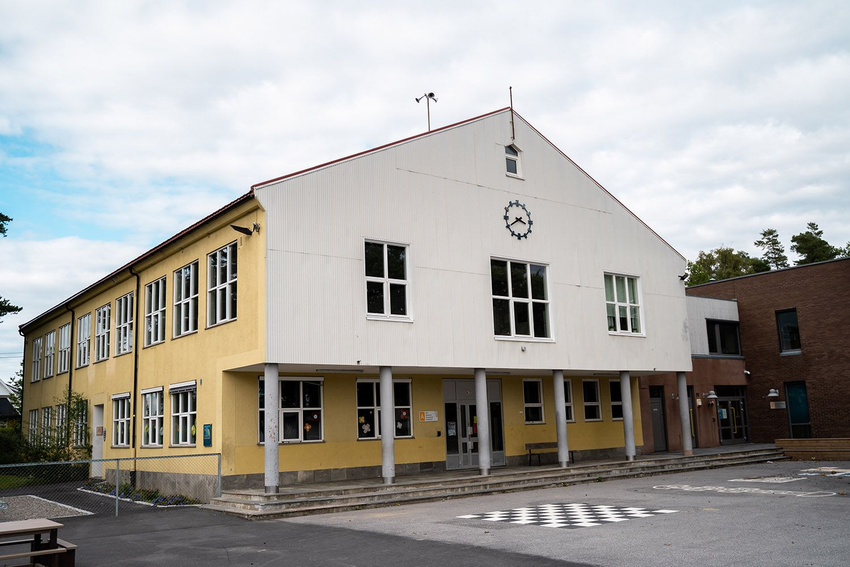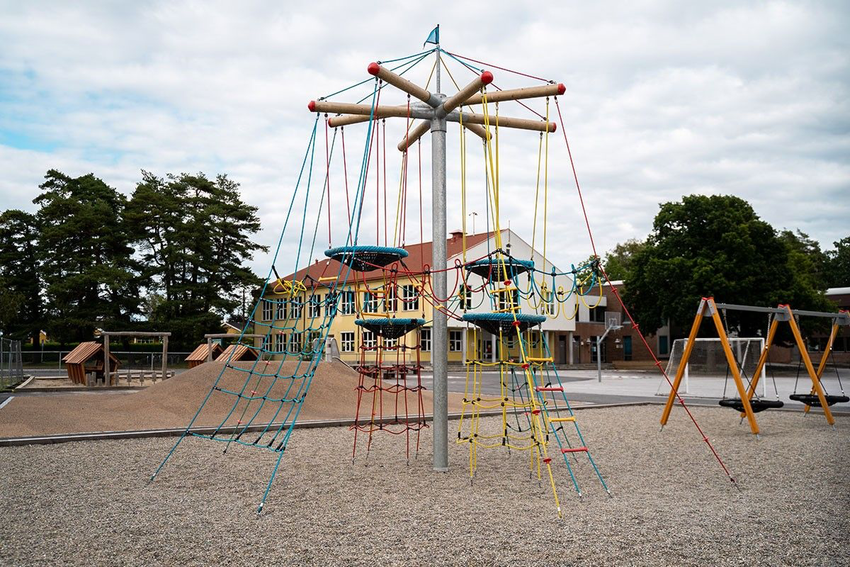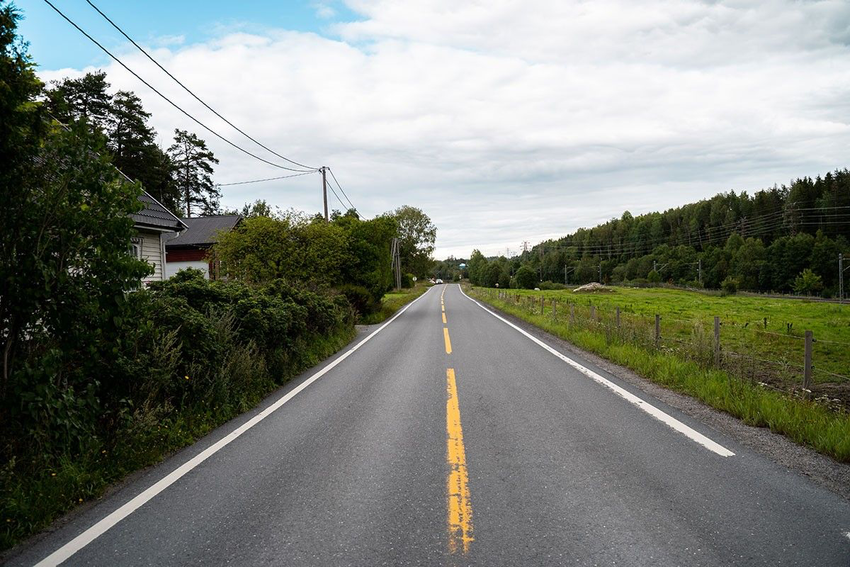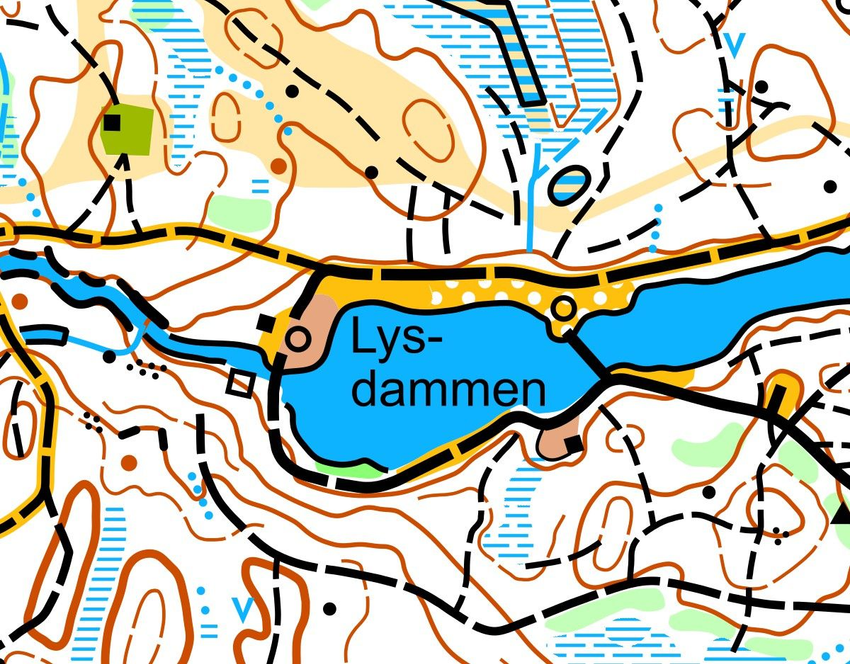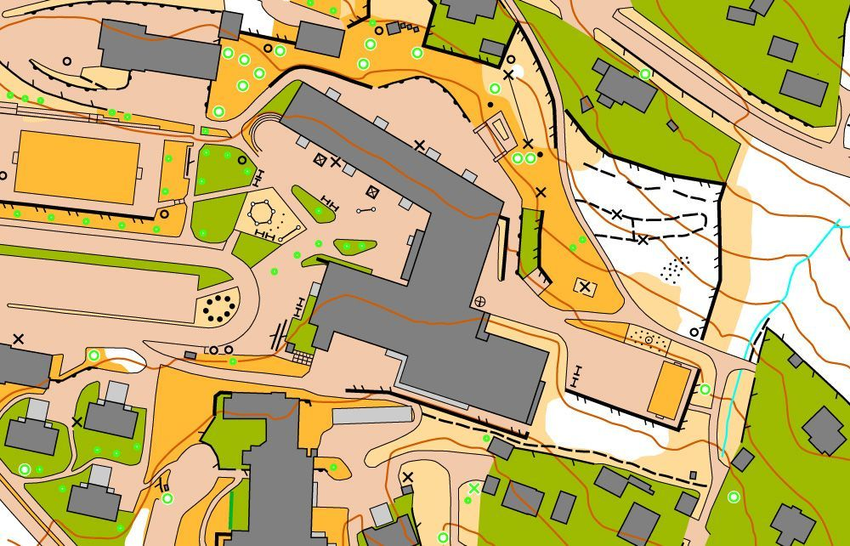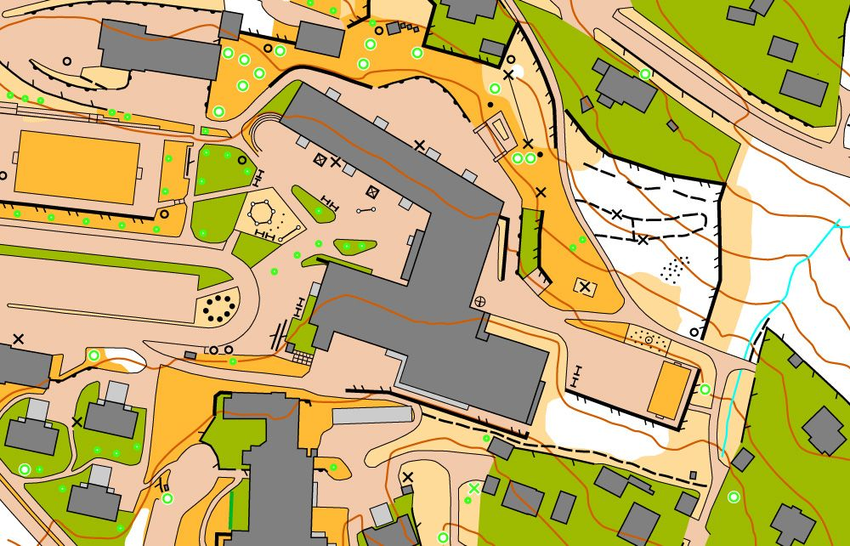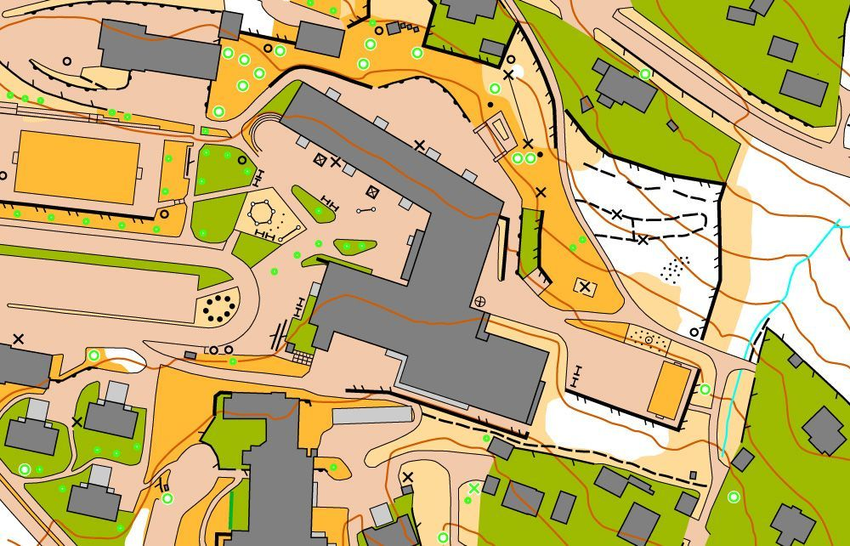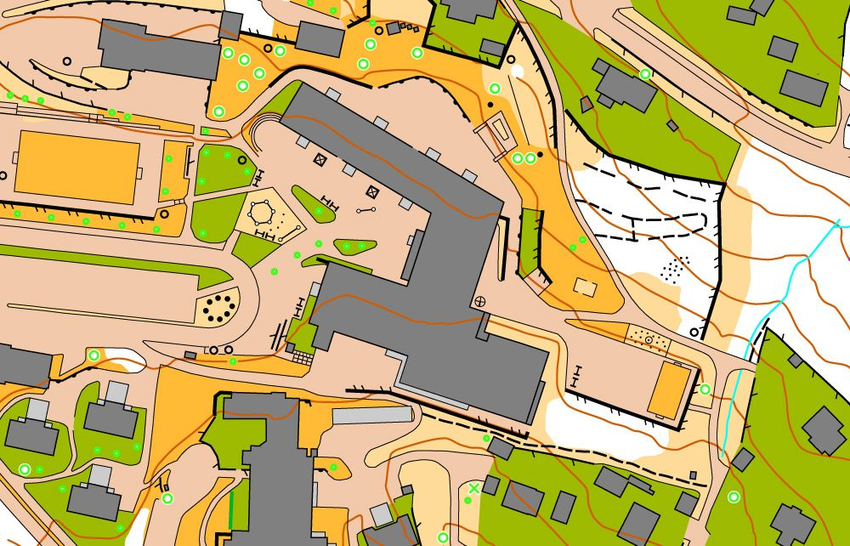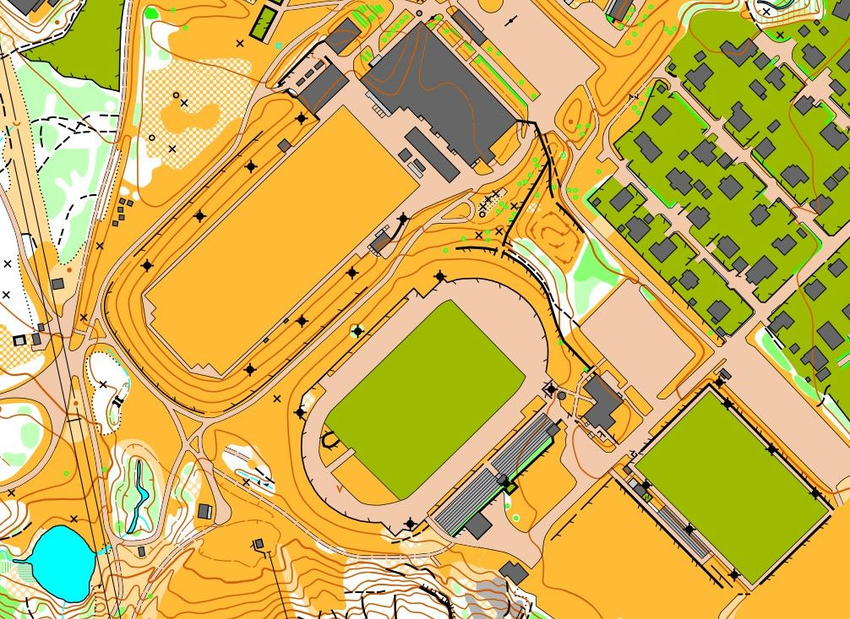
Here you will learn about the colors and symbols of orienteering maps used to depict different terrain features.
Colors in an orienteering map
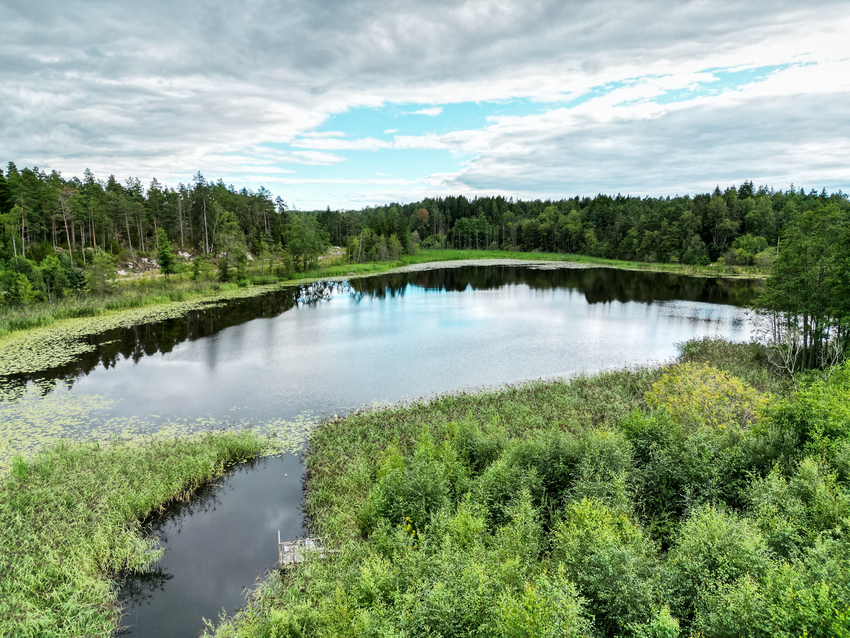
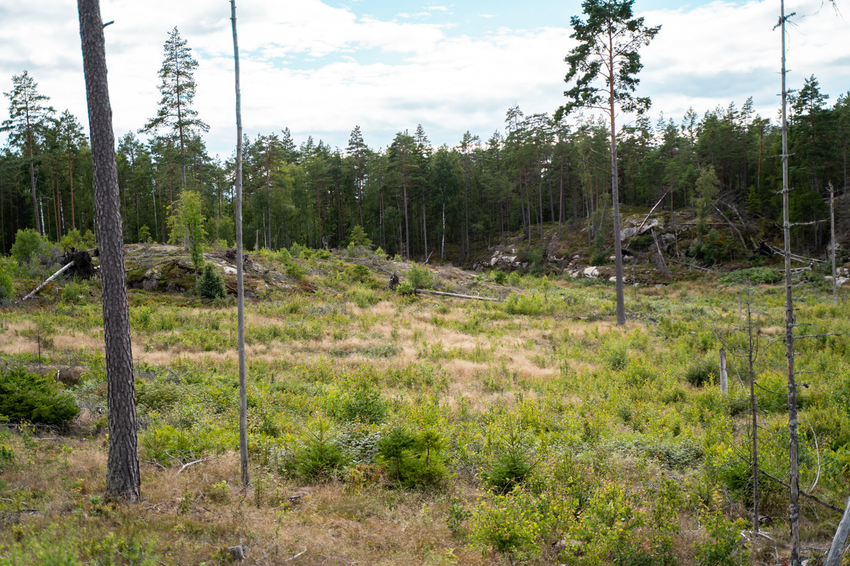
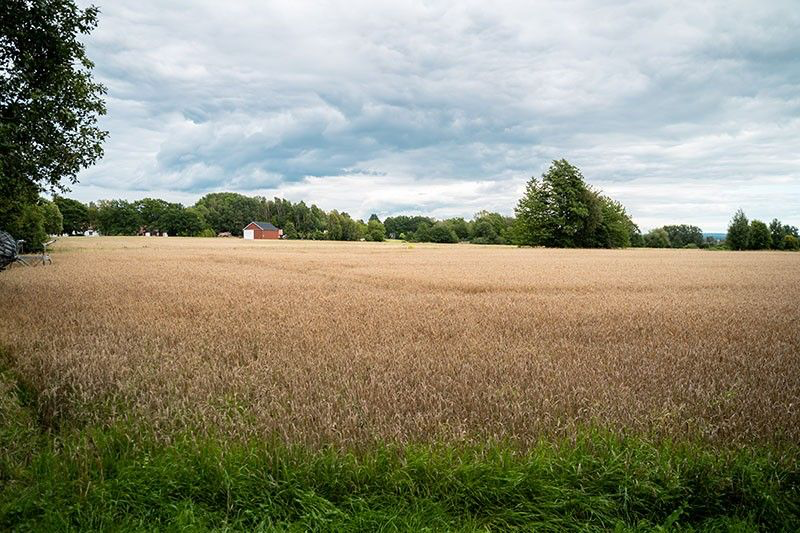
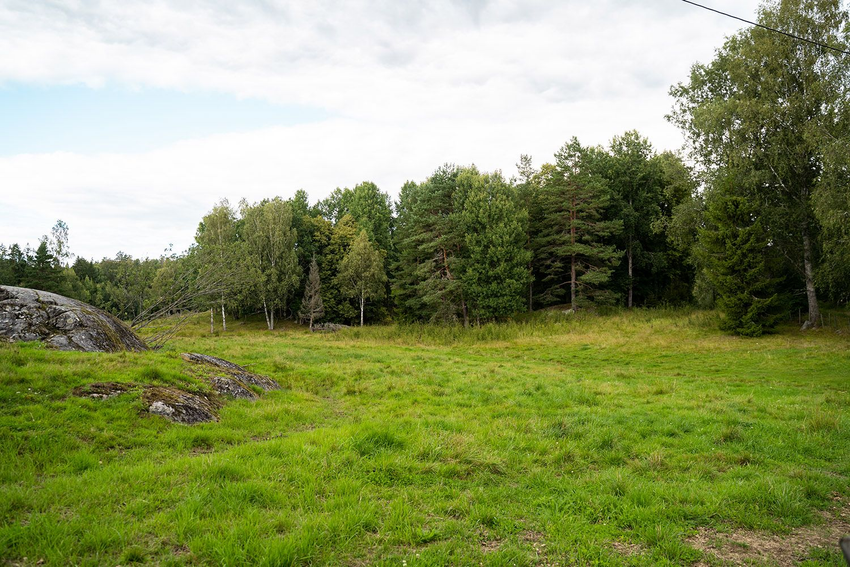
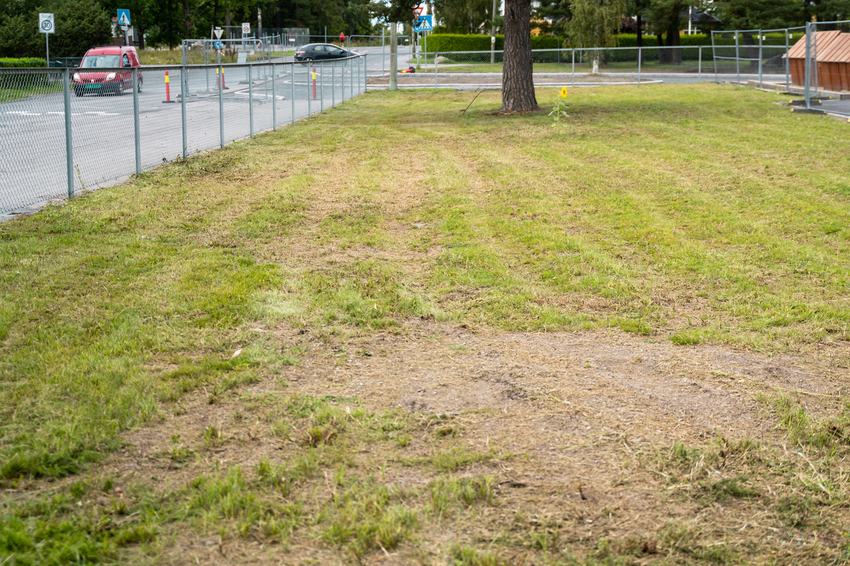
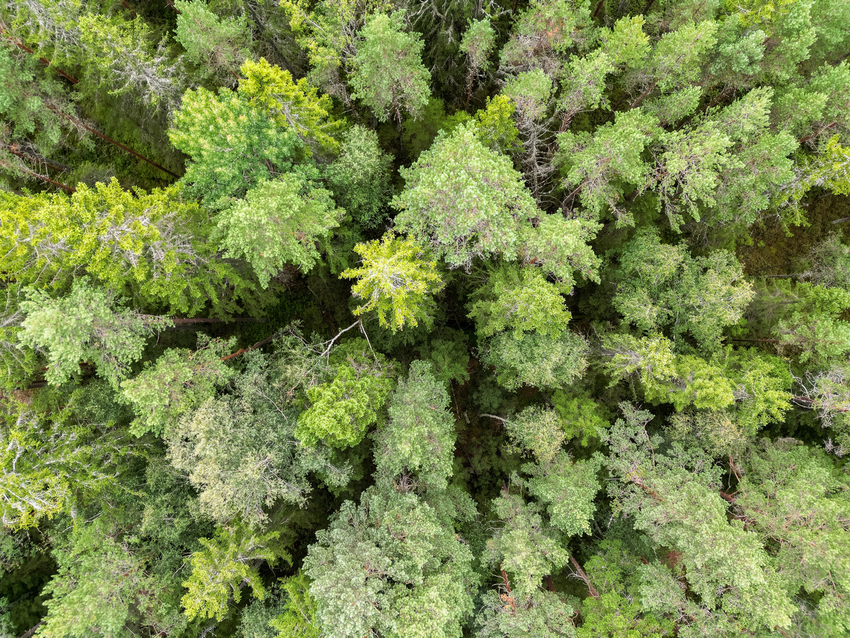
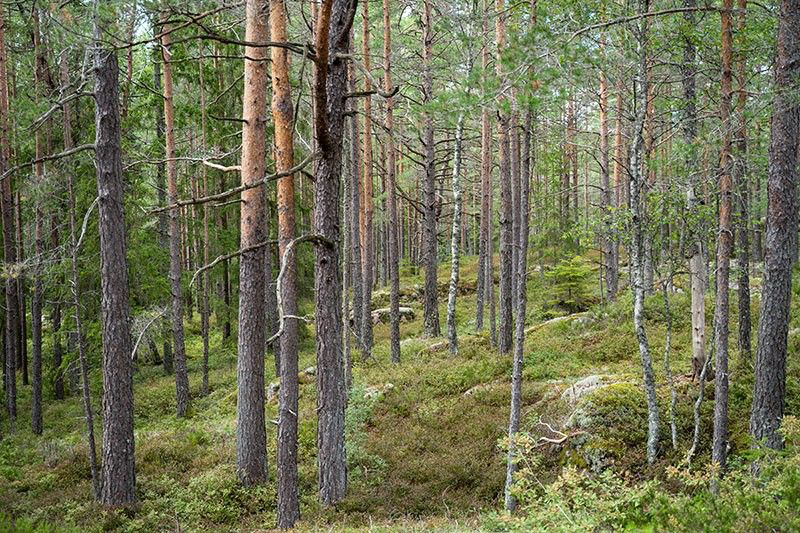
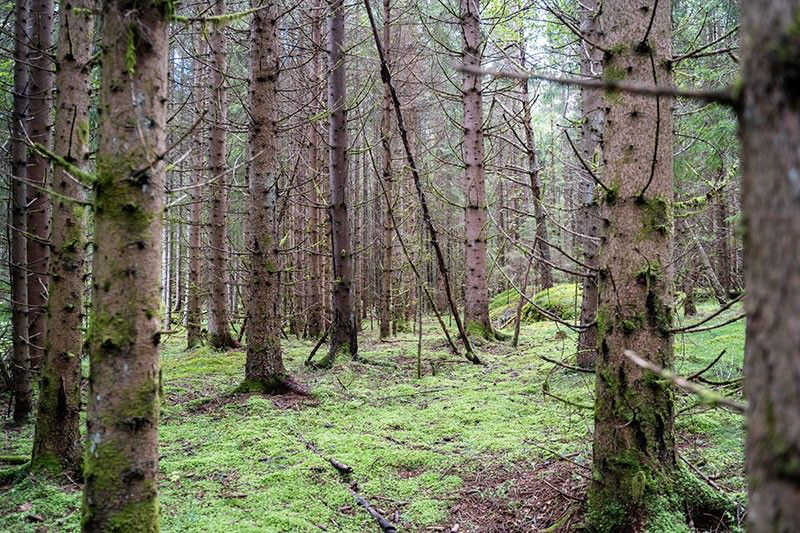
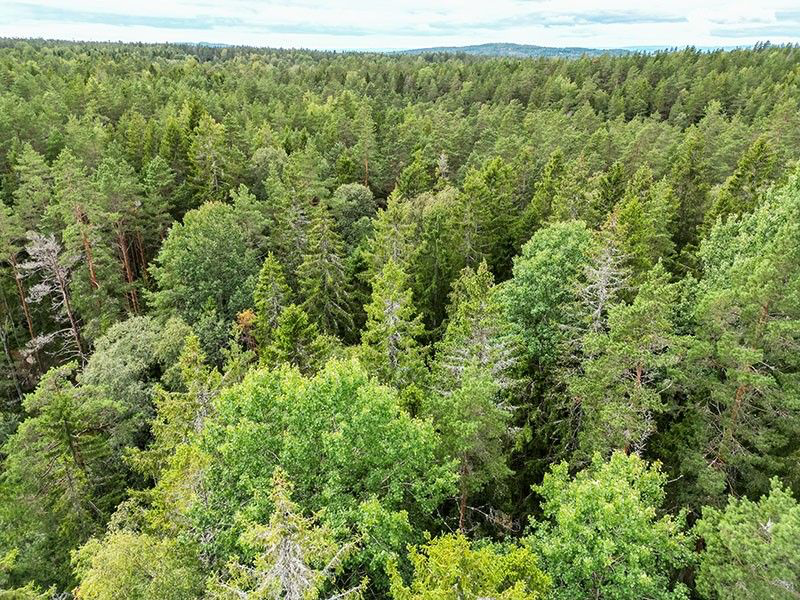
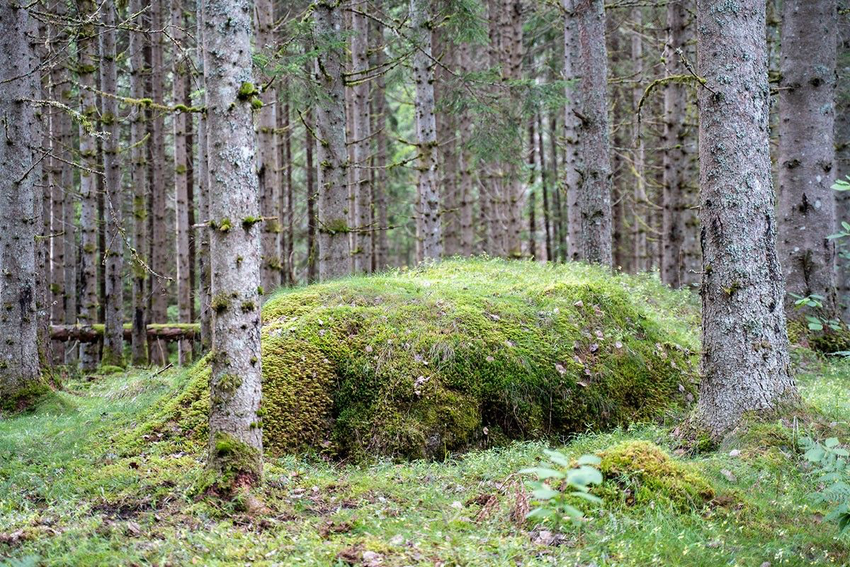
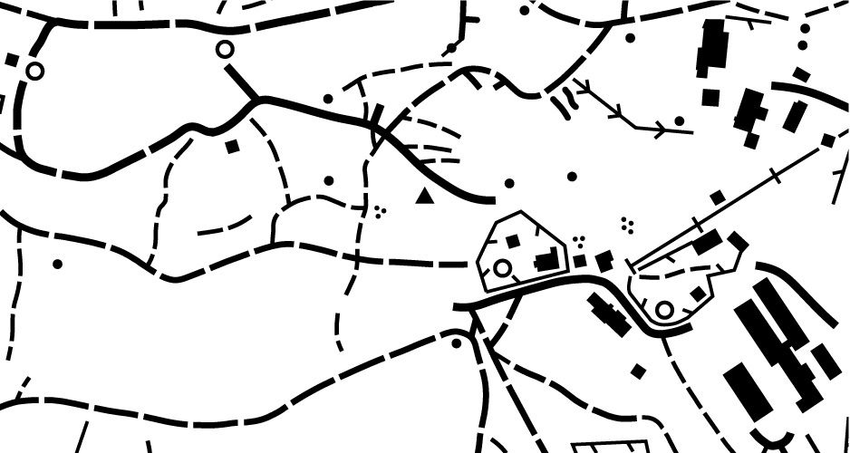
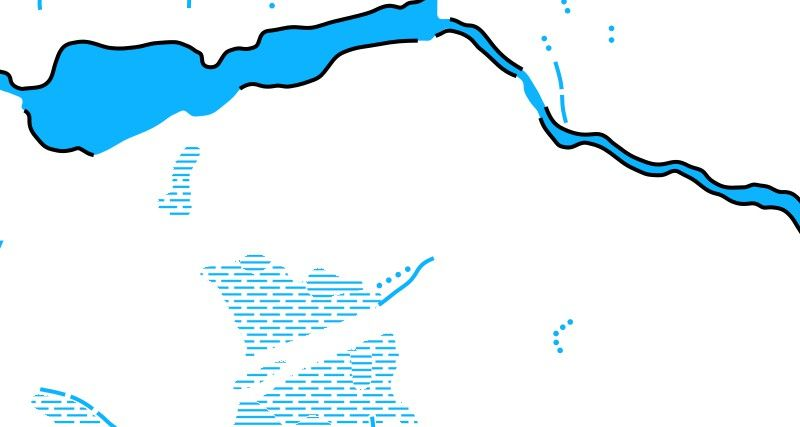
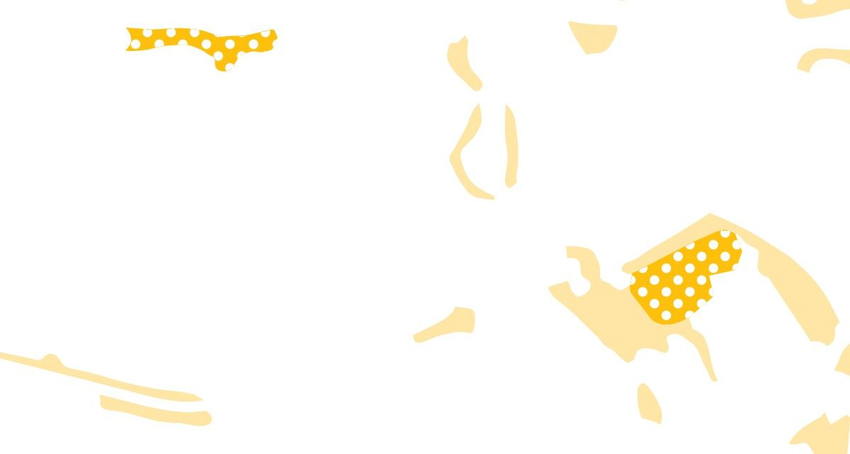
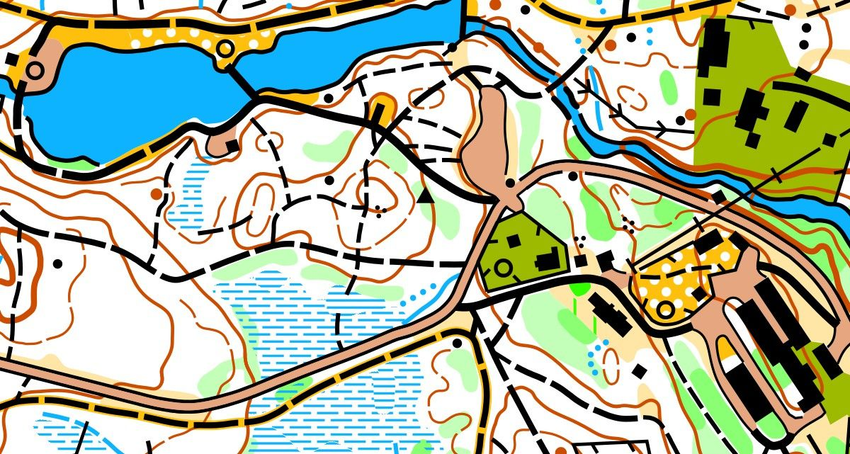
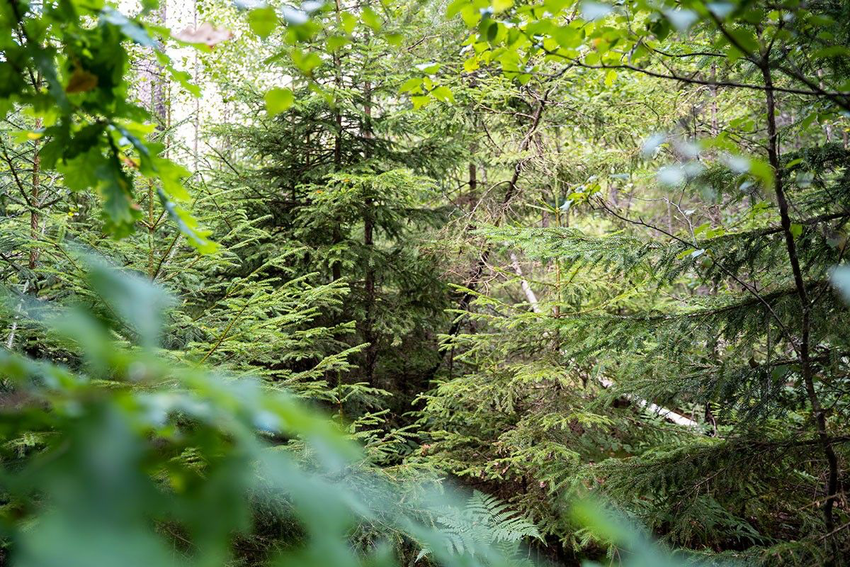
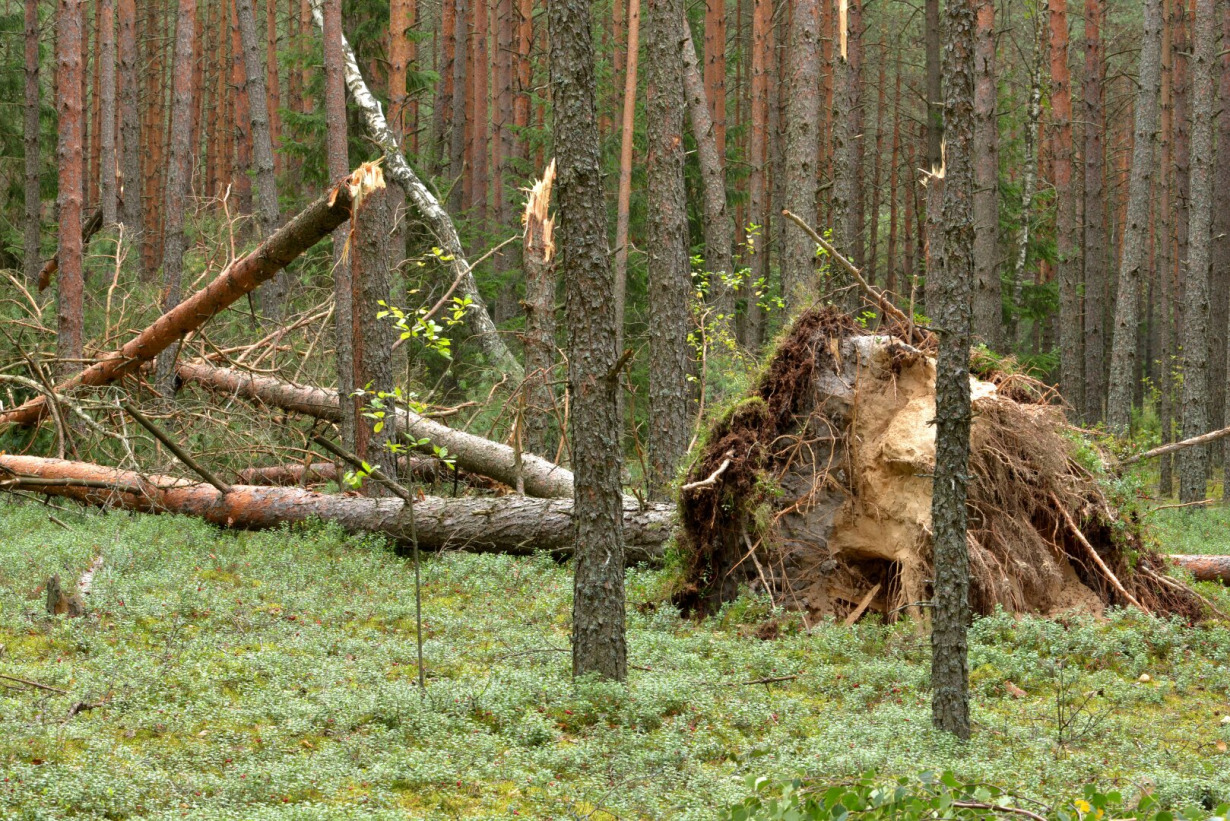
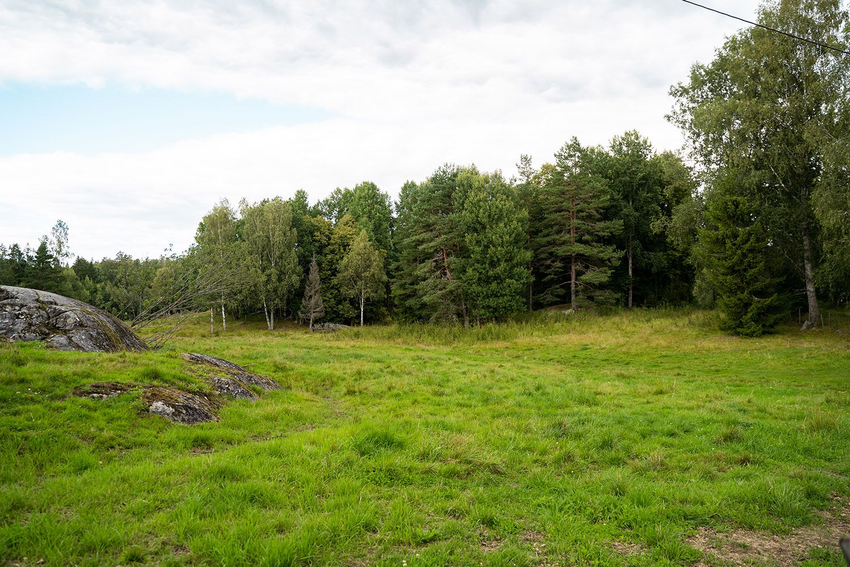
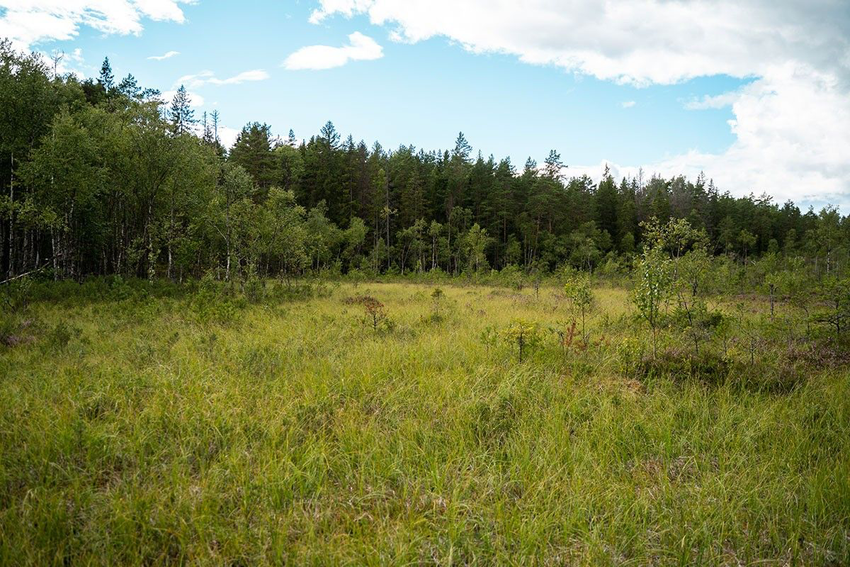
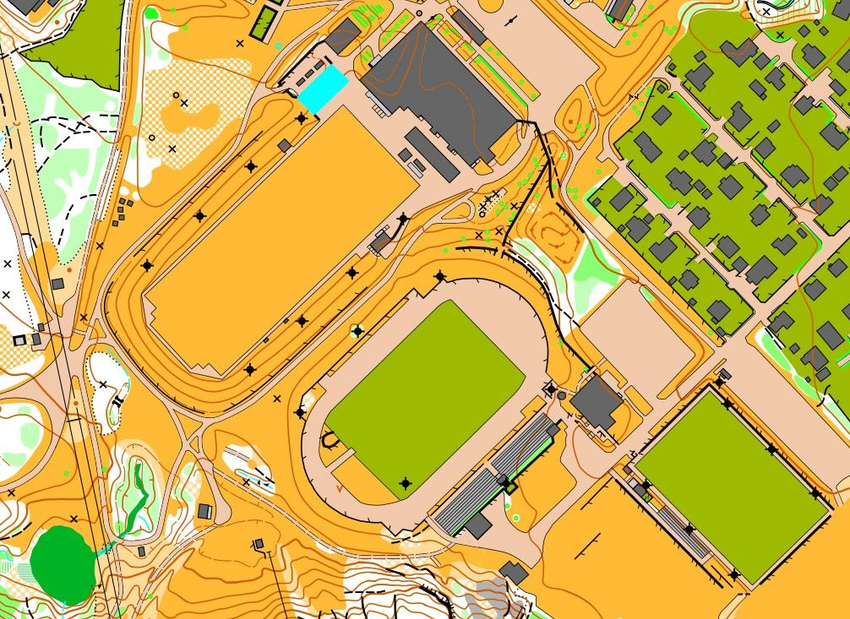
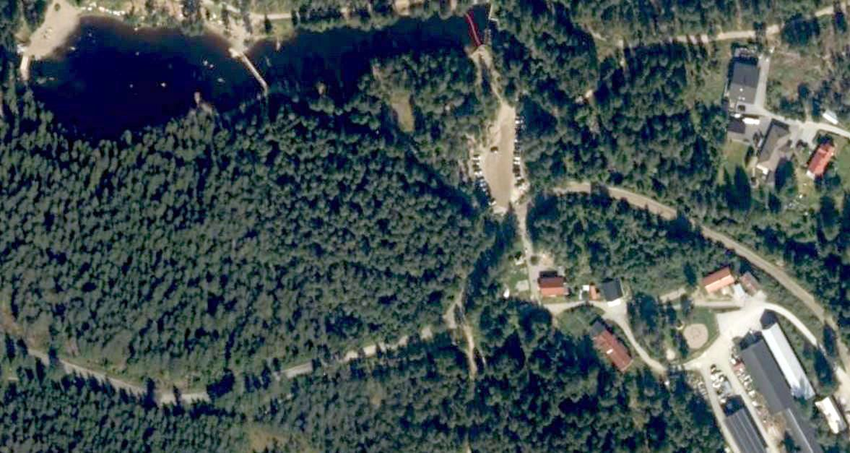
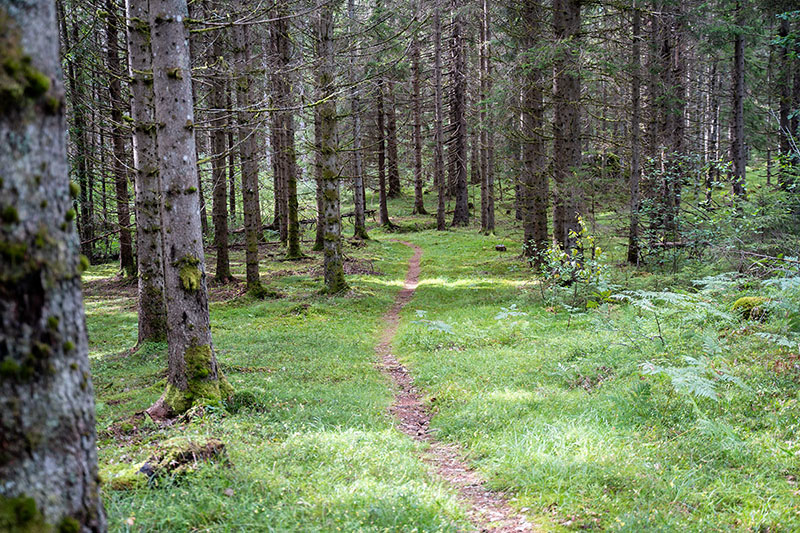
Here you can see an aerial photo of the same location and an orienteering map. By dragging the slider, you see that the map has different colors than the aerial photo. On the map, the colors are different from those you see in the location. Location details are depicted using symbols of various colors. Symbols can represent an object, such as rocks, roads, and buildings, or an area, such as dense forests, swamps, and fields.
Try to memorize the meaning of the map's colors
There are 6 different colors on the orienteering map. Tap the color buttons to see what they symbolize.
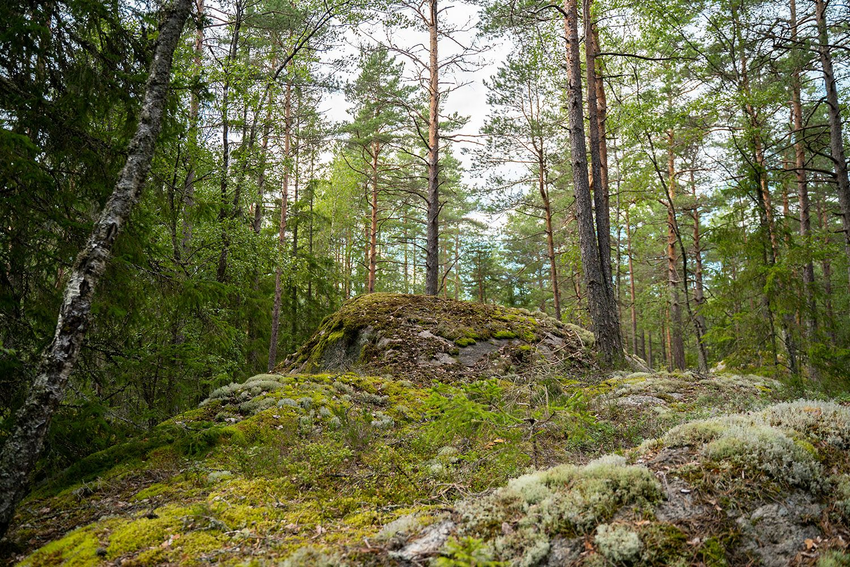
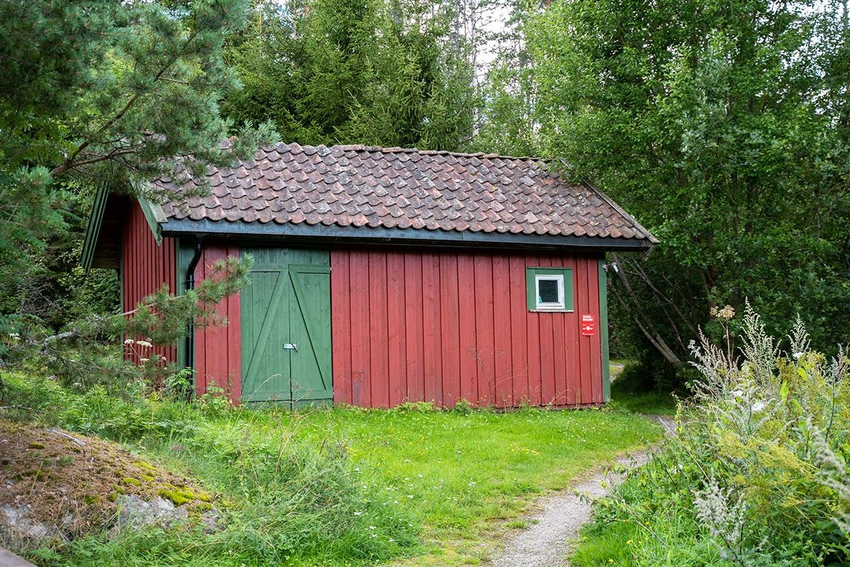
Swing, stone, rock, building
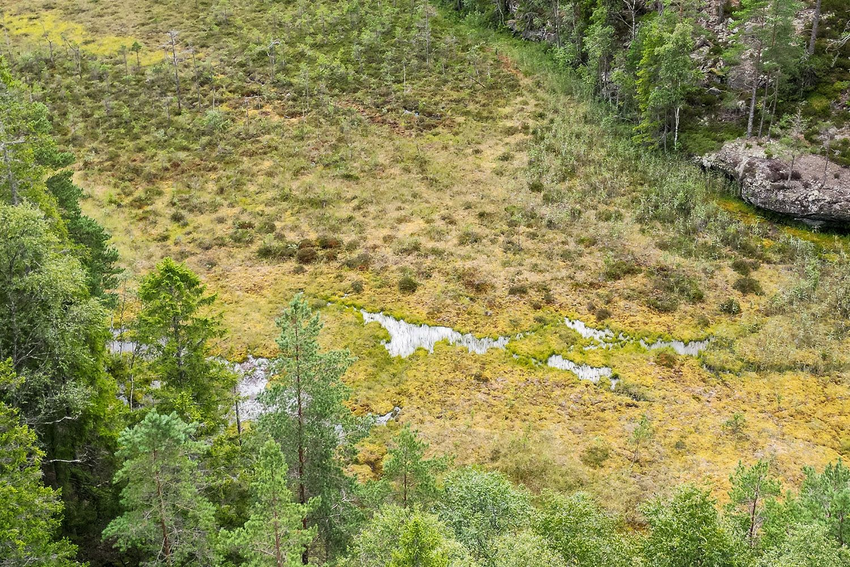
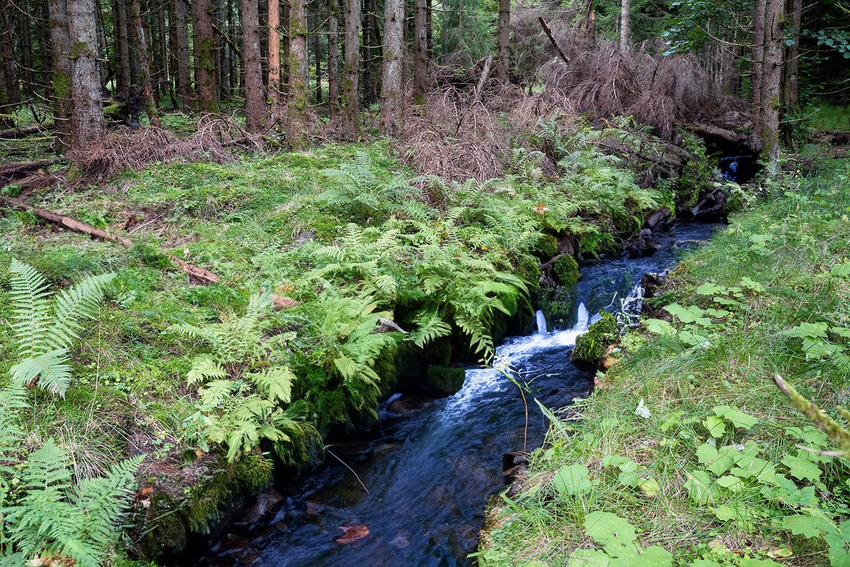
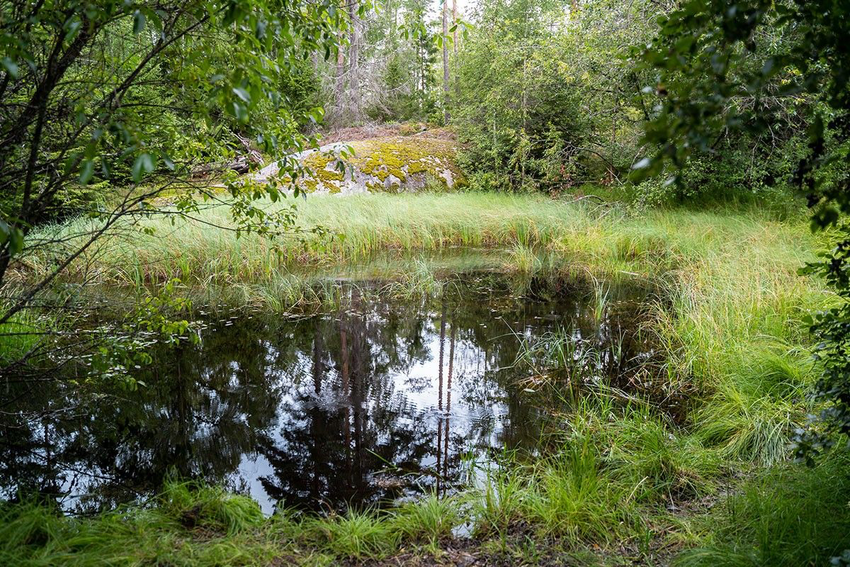
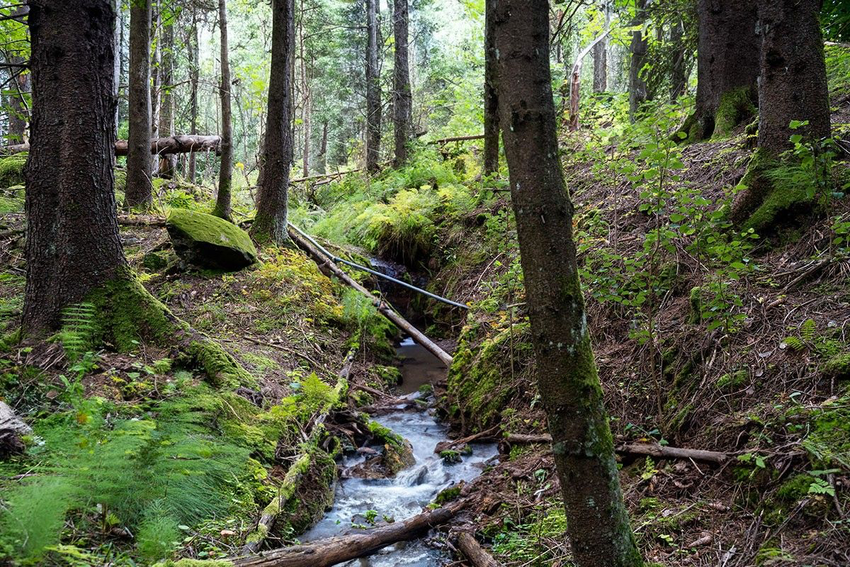
Lake, marsh, stream, and ditch
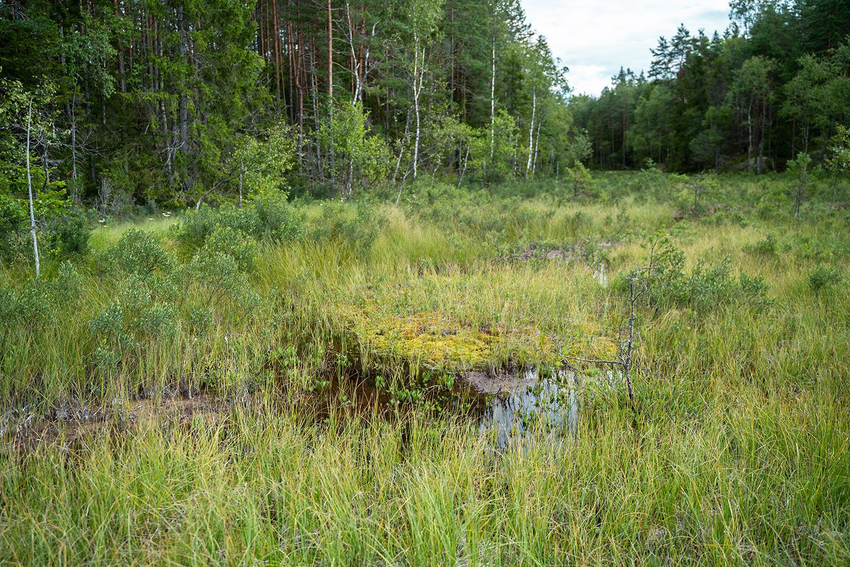
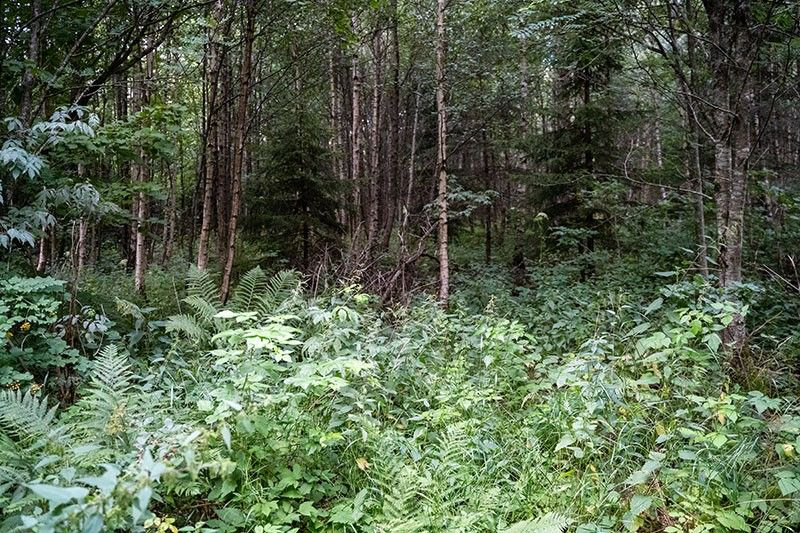
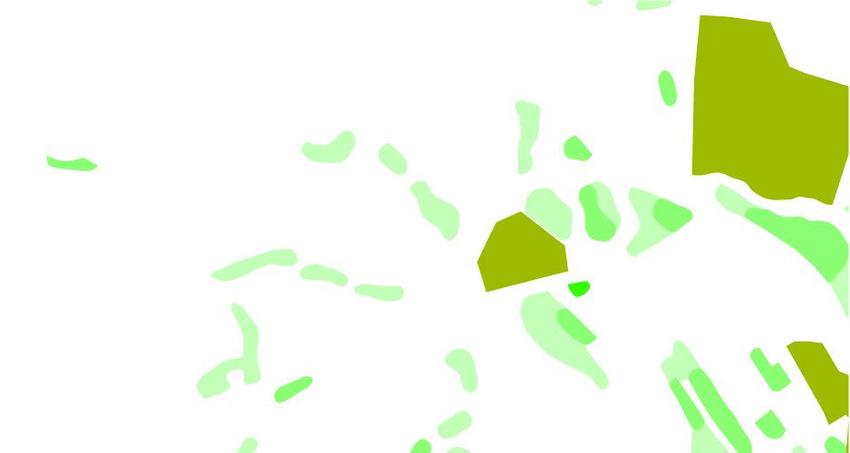
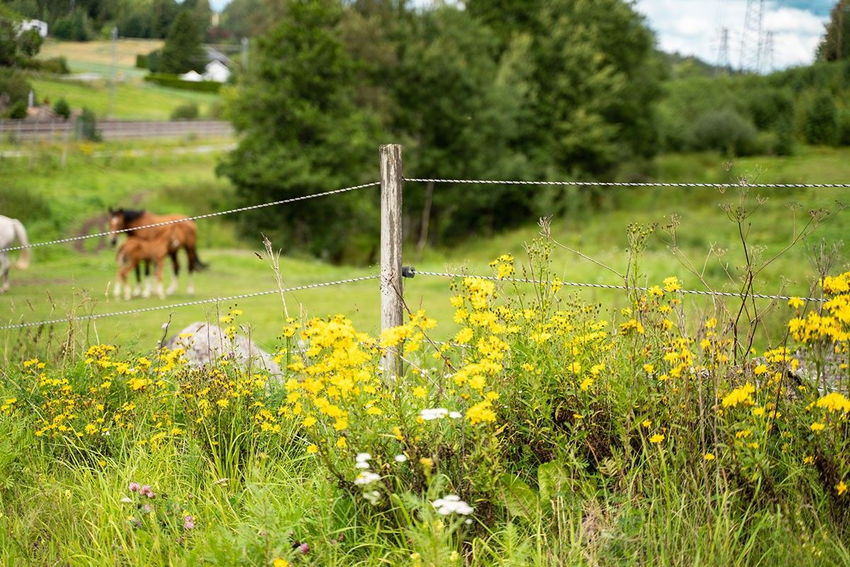
Forests, fields, meadows and open areas
Ordinary forest on the map is white.
One of the map objects marked in green is a dense forest. Gardens and other restricted areas are olive green.
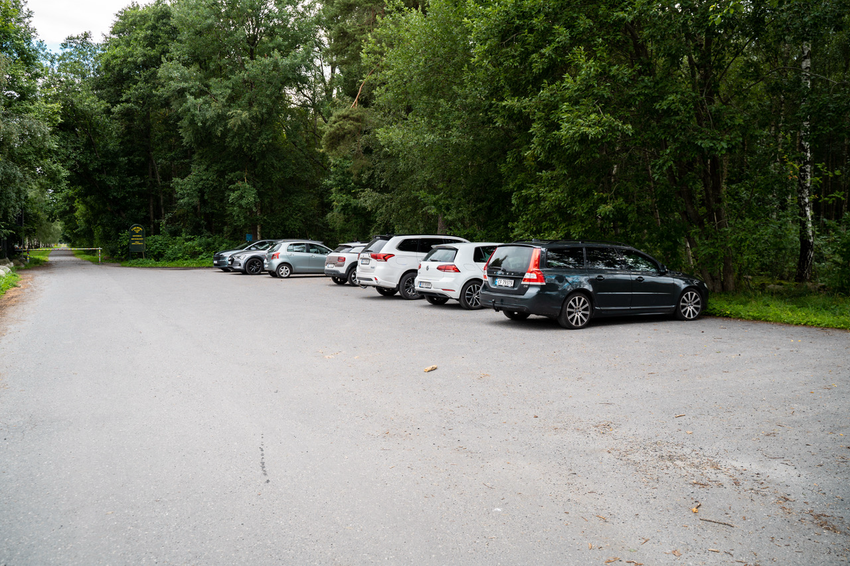
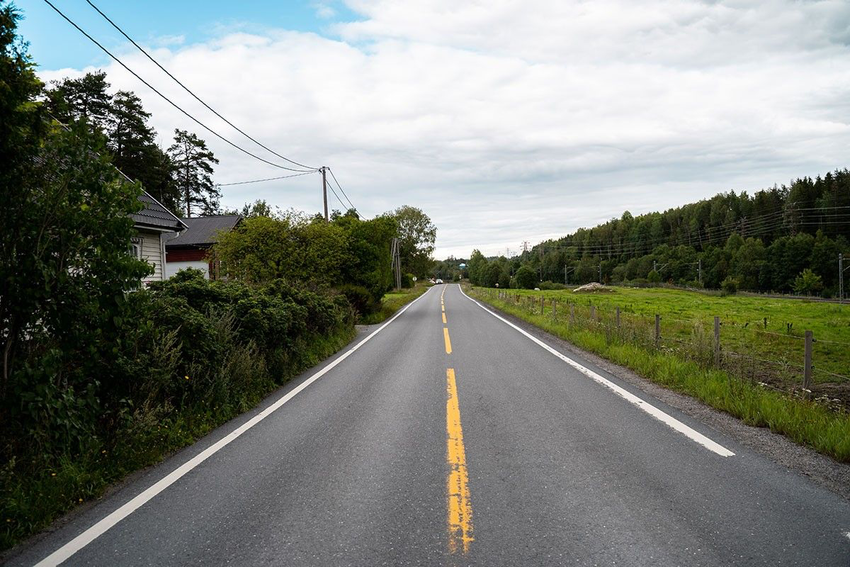
Parking lots, main roads, small and large hills are marked in brown on the map.
Diversity of map colors
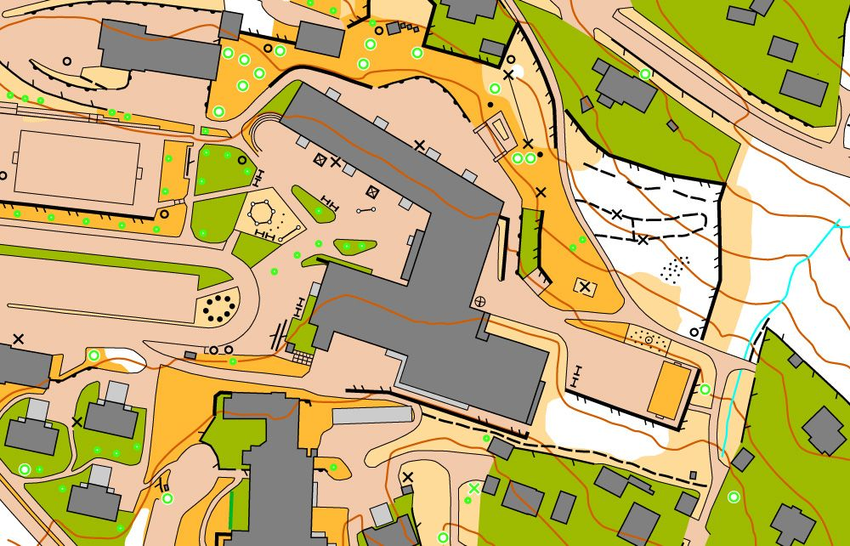
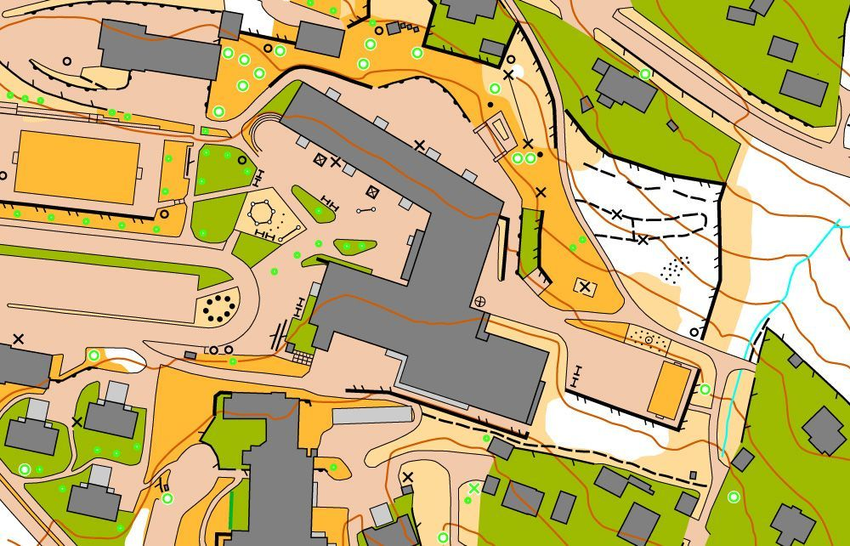
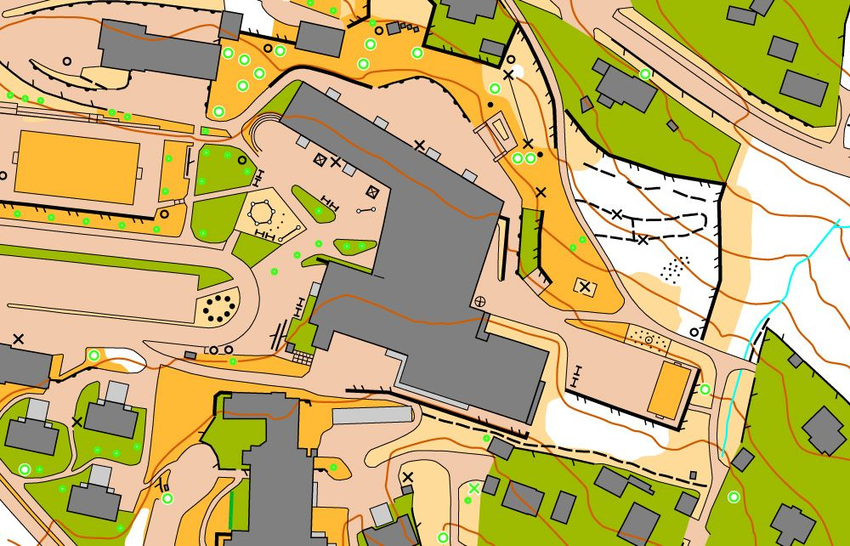
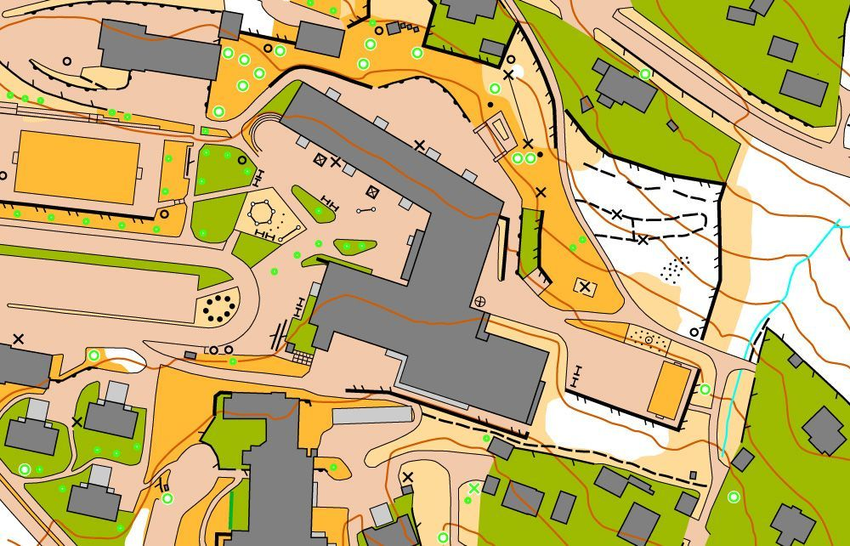
These maps depict the same area but in different colors. The last map is how an orienteering map should be!
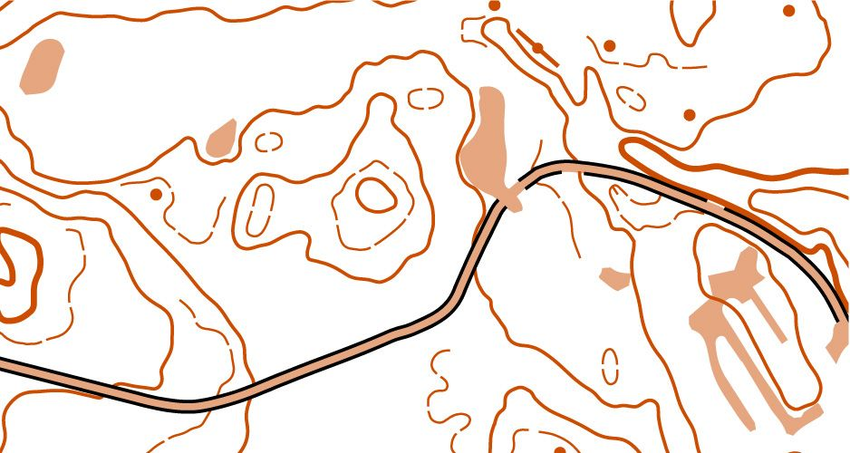
Rue
Black
Blue
Yellow
Green
Map with all colors
TIP
Remember: ○ Black is firm ○ Blue is wet ○ Yellow is open ○ Green is dense ○ Brown is terrain or road ○ White is light

Buildings
Path
Path
Electric Line
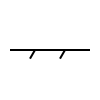
Fence
Stone
Cliff
Rock
Rocky area
Special object
Solid black
Lake, pond
Puddle
Bog
Marshy land
River, ditch
Open marsh
Blue is wet
Arable land
Field
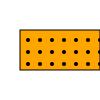
Open area with trees
Yellow is open
Dense forest
Big tree
Bush, small tree
Meadow/Plot - prohibited running area
Green is dense
Horizontal
Mountain
Small hill
Pit
Small pit
Highway
Road
Parking Lot
Brown is a terrain or road
Click the map icon to learn what it represents
Maps depict many details that you can see in the area, but not all. There is no space for that. The map author selects the big and important details and omits those that are too small.
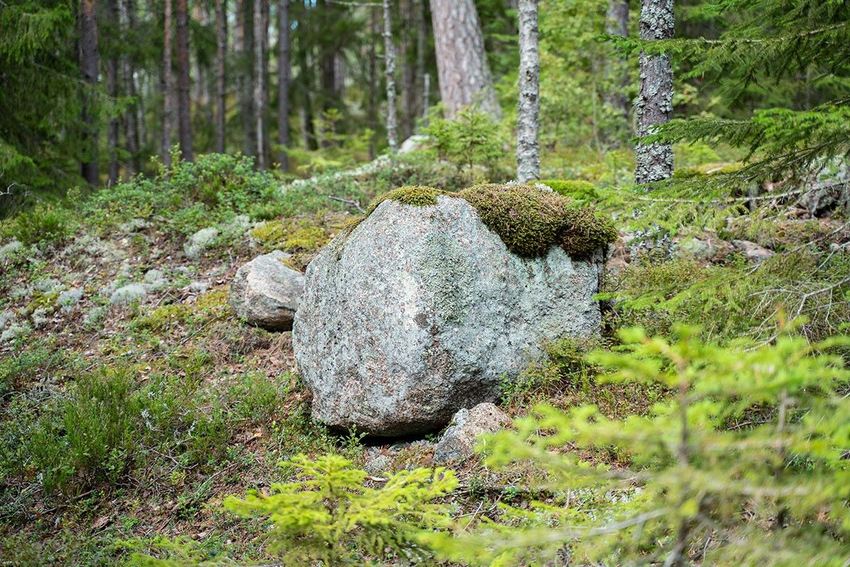
Stone
Knoll
Small mound symbol
Unconquerable Slope
Area
Impassable, difficult-to-overcome vegetation
Special vegetation object
Field
Marsh
Waterbody
Stream, narrow trench
Fence
Building
Special artificial object
Paved road
TIP
Most maps contain a legend so you won’t have to remember everything.
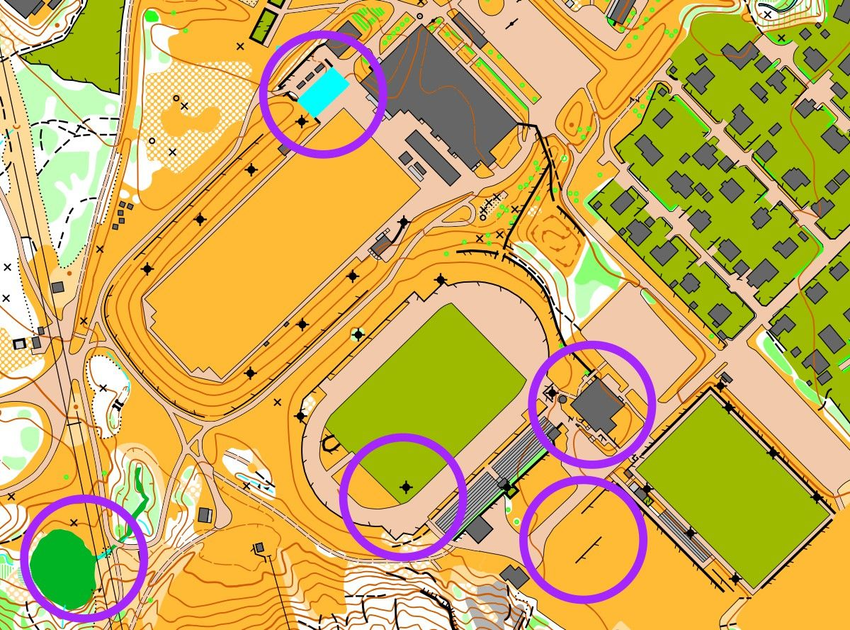
What 5 details are missing on map no. 2?
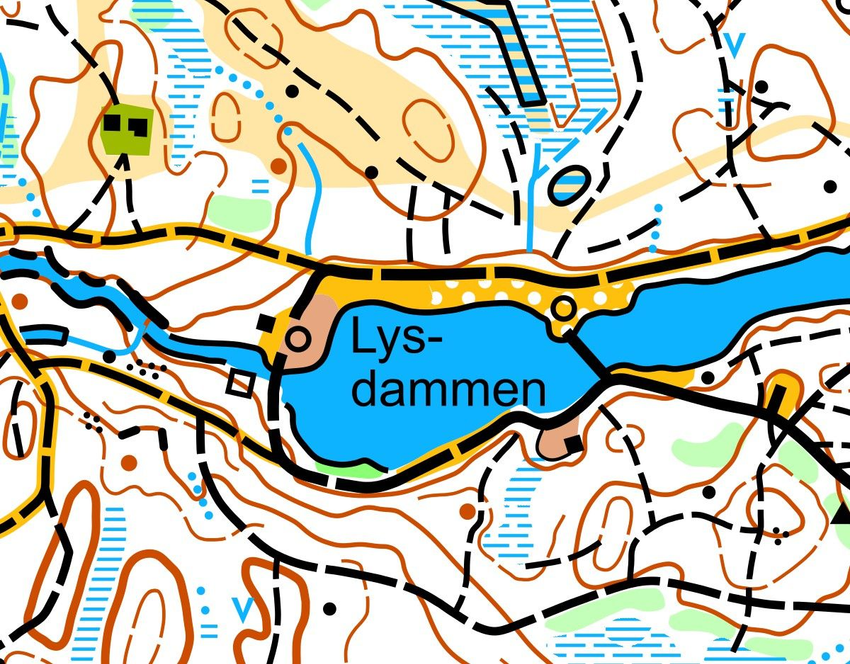
Map 1
Map 2
1. Stream, 2. Building, 3. Path, 4. Hill (small), 5. Stone
Space
This is a map of the schoolyard. Which of the four maps A, B, C, and D is exactly the same?